
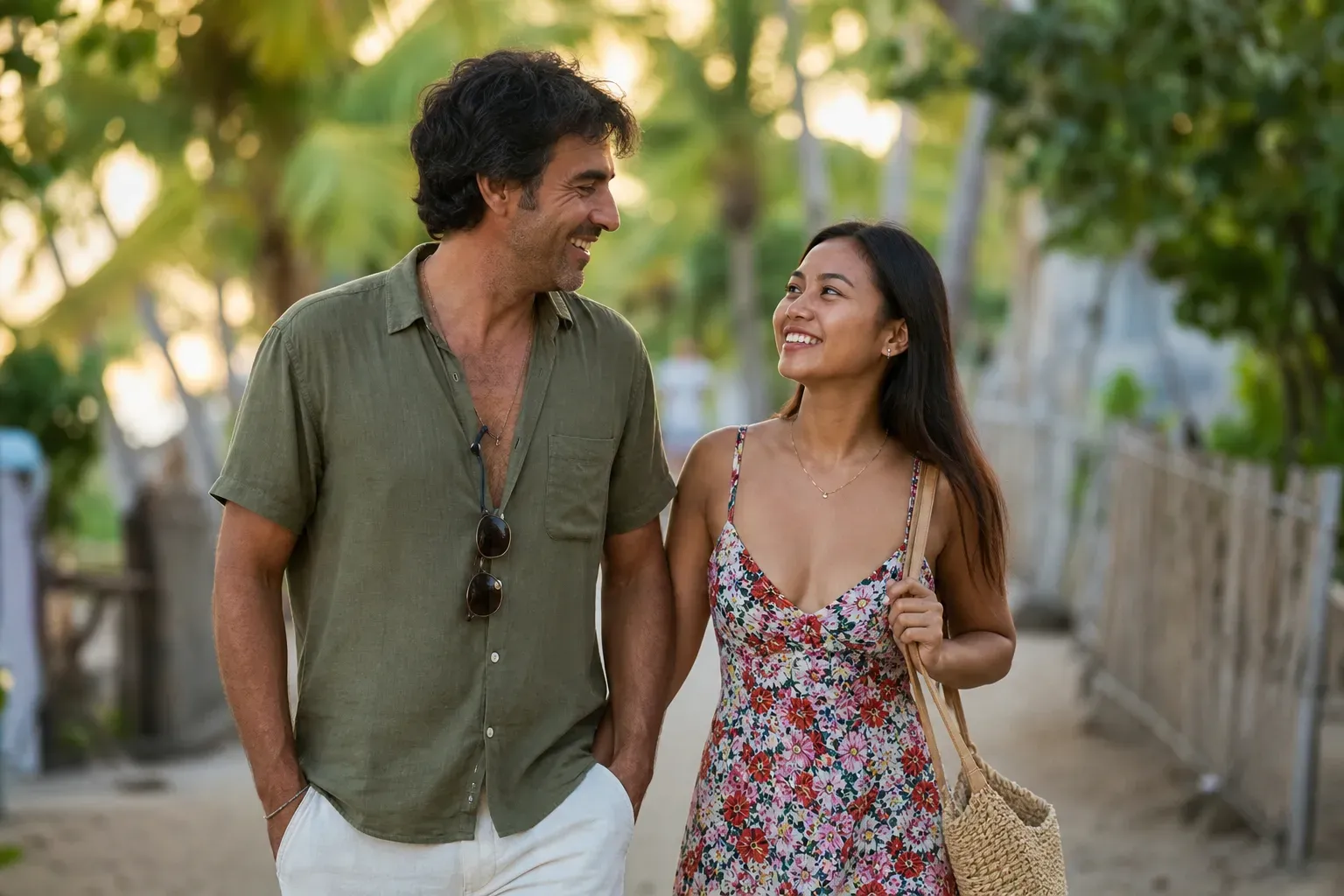
Filipina vs Spanish Dating at a Glance
Filipina vs Spanish dating is less about ranking and more about understanding cultural norms. Both cultures value warmth and connection, but they can differ in how quickly relationships progress and how families influence decisions. If you are dating across cultures, clarity and respect help the relationship move forward smoothly.
The safest way to use this comparison is as a starting point, not a rulebook. A Filipina from Manila, Cebu, or a province may date differently from another Filipina. A Spanish woman from Madrid, Barcelona, Valencia, or a smaller town may also have her own expectations. Culture gives context; the individual still matters most.
| Factor | Filipina | Spanish |
|---|---|---|
| Primary language with foreigners | English (widely spoken) | Spanish preferred, English varies |
| Communication style | Careful, indirect early | Direct, expressive |
| Dating pace | Steady, consistent progress | Can progress quickly emotionally |
| Family involvement | Central, early influence | Important, introduced later |
| Long-term orientation | Marriage and family-focused | Compatibility and shared plans |
Family expectations and involvement
In Filipino culture, family ties often influence relationship decisions. It is common to hear about family early and to be mindful of how your intentions align with long-term plans. In Spanish dating culture, family matters too, but it may stay more in the background until the relationship is clearly established.
For a foreign man dating a Filipina, this can mean public early dates, questions about your background, or a family member becoming aware of you sooner than you expect. That should not be treated as a loss of privacy. It is often about safety, reputation, and making sure the relationship is not just vacation attention.
Spanish families can also be close, but the couple may have more room to define the relationship first. If you are used to that dynamic, ask a Filipina what level of family awareness feels respectful instead of assuming she is moving too fast.
Communication style and emotional tone
Many Filipinas communicate with care and may be more indirect at the start to avoid conflict. Spanish dating can feel more direct and expressive early on. Neither approach is better, but understanding the difference helps you interpret signals accurately and avoid misunderstandings.
In Spanish dating, lively debate, teasing, and strong emotional expression may feel normal. In Filipina dating, especially early, politeness and harmony can be more important. A soft answer, pause, or nervous laugh may carry meaning. If you are unsure, ask gently: “Would that feel comfortable for you?” is better than forcing a blunt yes or no.
Relationship pace and commitment signals
Filipina dating often favors steady, consistent progress rather than rapid intensity. Clear intentions and respectful follow-through build trust. Spanish dating can progress quickly in terms of emotional expression, but long-term commitment still depends on compatibility and shared plans.
This is where many cross-cultural misunderstandings happen. A Filipina may appreciate early seriousness, but she may still want a slow build toward private intimacy, family introductions, or exclusivity. Spanish dating may feel emotionally warm quickly, but that does not always equal a settled long-term plan. In both cases, match words with actions.
Dating settings and social norms
In the Philippines, public, daytime meetups are common at the start, especially when dating begins online. In Spain, evening social settings and group meetups can be more typical. The key is to follow your date’s comfort level and keep early plans simple, respectful, and easy to exit if either person feels uneasy.
If you are meeting in the Philippines, choose venues with easy transportation and visible public activity: cafes, malls, restaurants, markets, or daytime walks. If she prefers to bring a friend or keep the first meeting short, that is usually safety planning rather than rejection.
Practical tips for cross-cultural dating
Keep your communication steady and transparent. Ask questions about values, family expectations, and long-term goals. Avoid assumptions based on stereotypes, and focus on the person in front of you. When you show respect for culture and individuality, you give the relationship the best chance to grow.
For Filipina vs Spanish dating, the practical takeaway is not “which is better.” It is knowing when to slow down, when to be clearer, and when to ask about family, privacy, and relationship pace. Respectful curiosity will outperform cultural guessing every time.
If you are coming from Spain or another Spanish-speaking background, do not assume shared Catholic influence makes dating expectations identical. Filipino family visibility, English-Tagalog communication, long-distance planning, and overseas work realities can create a different relationship path. Ask about the practical details early so warmth does not hide mismatched expectations.
Related reading
Questions, answered
Frequently asked questions
Is Filipina dating more family-oriented than Spanish dating?
Family involvement is often more visible earlier in Filipino dating, especially when the relationship has long-term or marriage potential.
Do Filipinas expect faster commitment than Spanish women?
Expectations vary by person, but many Filipinas appreciate clarity about intentions early. Clarity does not mean rushing commitment before trust exists.
Is communication style different between Filipinas and Spanish women?
Filipinas may use more careful or indirect phrasing early, while Spanish dating culture can feel more direct and expressive.
Which culture is more comfortable with long-distance dating?
Filipinas may be more familiar with long-distance starts in international dating, but trust still depends on video calls, consistency, and realistic plans.