
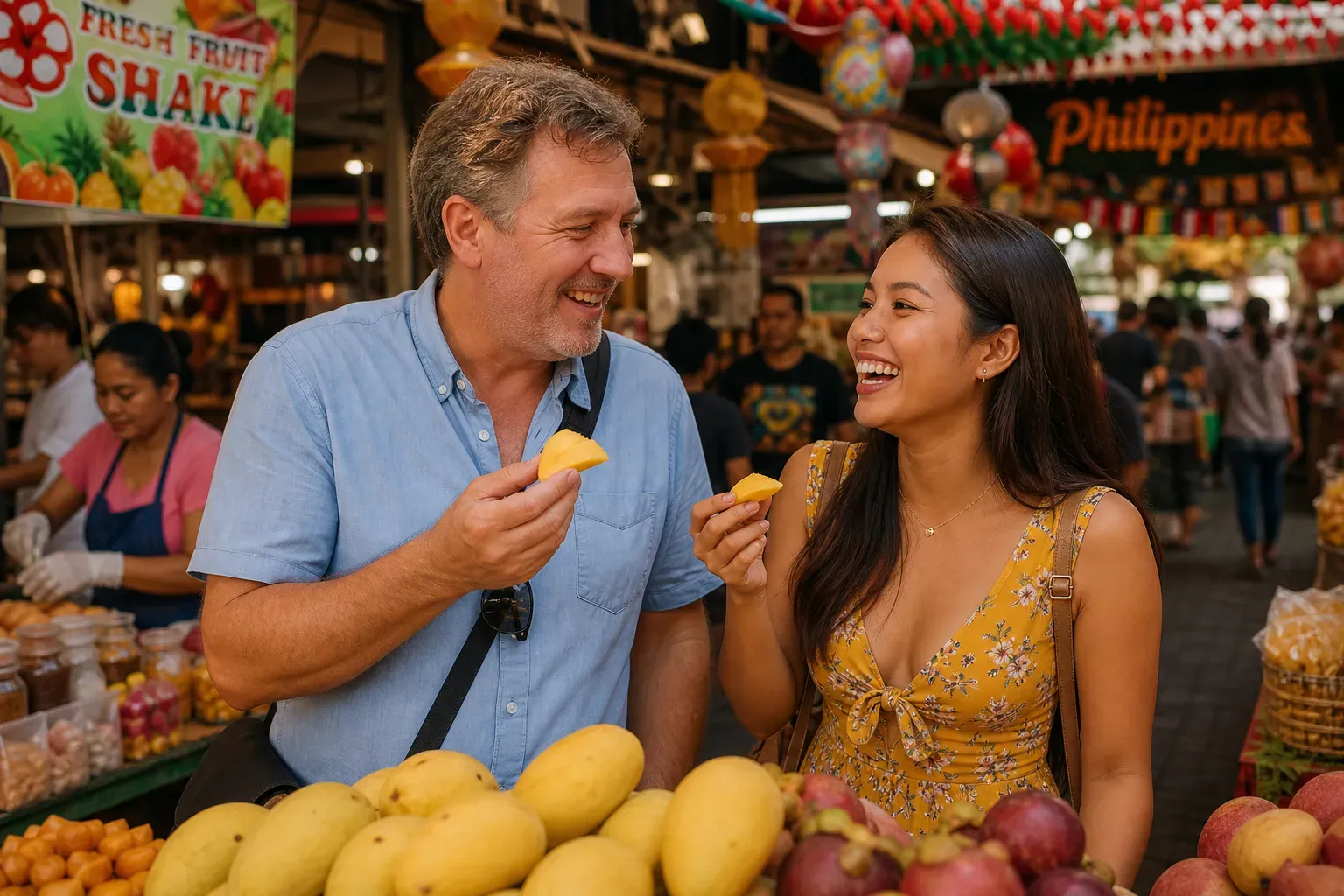
Understanding Philippines Dating Culture
Philippines dating culture has no single rulebook. Traditional courtship, close family ties, religion, city life, and modern dating apps can all influence a relationship, but not every pattern applies to every person. Use this context to ask better questions, not to predict how a Filipina will behave.
The Philippines is an archipelago with major regional differences in language, religion, work, and family life. Dating norms in Metro Manila can differ from those in the Visayas or Mindanao. Age, education, community, and individual experience add more variation. Our companion guide to Filipino values in relationships explains commonly discussed concepts without treating them as personality traits.
Courtship and Consistency in Filipino Dating Culture
Traditional Filipino courtship, known as panliligaw, emphasizes consistent effort, patience, and respect. Its older forms could include visits, acts of service, and family involvement. Some modern couples still value those customs; others meet through apps and define the relationship in their own way.
Effort, reliability, and respect for boundaries are often interpreted as signs that you are genuinely interested. This means that showing up regularly, following through on what you say, and being patient if she moves slowly are all working in your favor. In contrast, inconsistency — messaging intensely for a few days and then disappearing — is often read as a lack of real interest.
Courtship can also involve a partner’s family or close friends. That does not mean you need to impress her parents on the first date. Let her decide when introductions are appropriate and what they mean.
Family as a Relationship Factor
Many Filipinos maintain close ties with parents, siblings, and extended relatives, and some adults share a household with family. A partner may discuss major relationship decisions with people she trusts. Others are private or highly independent. Ask how her family works rather than treating closeness as automatic dependence or approval as a universal requirement.
A strong connection with her family can strengthen the relationship and reduce friction later. When you are introduced to family members, treat the occasion seriously. Be polite, ask questions about their lives, and avoid controversial topics. Bringing a small gift — food or something from your home country — is a thoughtful gesture that will be noticed.
If relatives express concern, listen before reacting. You can show consistency over time while still discussing boundaries with your partner. Do not try to isolate her from people she trusts, and do not assume family members should control the couple’s decisions.
Communication Style
Indirect communication can appear around sensitive topics, but it is not safe to treat “maybe,” silence, or politeness as consent. If an answer is unclear, pause and ask a simple question that makes “no” easy to say.
Listen for context, tone, and consistency rather than only direct statements. If she agrees to plans but seems unenthusiastic, check in gently rather than assuming everything is fine. Phrases like “Are you sure you are comfortable with that?” or “It is okay if you would prefer something different” give her room to express what she really feels.
When she communicates directly, take it at face value. The goal is not to decode a “Filipino communication style.” It is to build a shared style in which both people can disagree safely.
The Role of Religion
Catholicism is the country’s largest religious tradition, alongside other Christian denominations, Islam, and people with different or no religious practice. For some women, faith shapes views on intimacy, marriage, and family planning. For others, it is cultural background rather than a daily rule.
If religion is important to her, respect that openly. Ask about her beliefs with genuine curiosity rather than skepticism. If your own values differ, be honest about that early. Compatibility on core beliefs matters for long-term relationships, and pretending to share views you do not hold will create problems later.
Modern Dating Platforms
Online dating has expanded how people meet, especially across regions and countries. The platform does not tell you a person’s relationship goal, so ask whether she is looking for conversation, casual dating, a committed relationship, or marriage. The best dating apps to meet Filipinas guide compares options by intent and safety rather than assuming one app fits everyone.
One practical advantage of online dating is that it gives you time to learn about each other before meeting in person. Use that time well. Ask thoughtful questions, share details about your own life, and establish a comfortable rhythm. Women who are looking for genuine relationships will appreciate a man who takes the time to build rapport rather than rushing to meet.
Anyone may be cautious about a new international match. Be specific about your availability, travel limits, and relationship intent, then let consistent actions build trust. You may also encounter the slang AFAM, a context-dependent term for a foreigner.
If you are asking the more practical search question, read is dating easy in the Philippines? for a realistic answer about apps, cities, foreigners, family expectations, and safety.
Related guides
- How to Date a Filipina
- Is Dating Easy in the Philippines?
- How to Message Filipinas Online
- Filipina vs Thai Dating: Philippines vs Thailand Compared
- Explore Profiles by Region
- Understanding Lambing and Tampo
- Kilig: The Filipino Word for Romantic Butterflies
- Public vs Private Dating Norms in the Philippines
- How Gen Z Filipinas Date
Questions, answered
Frequently asked questions
What is panliligaw?
Panliligaw is traditional courtship where consistent effort and respect are shown over time.
How important is family approval?
Family approval matters in many Filipino relationships, especially as commitment becomes serious, but the level of involvement varies. Ask your partner how she wants family included instead of assuming.
Do modern apps change these values?
Apps changed how people meet, but they did not create one dating style. People use them for casual dating, friendship, and serious relationships, so discuss intent and boundaries directly.