
Cultural field guide
Filipino values in relationships center on family, gratitude, respect, and social harmony. The values that shape dating and commitment the most are kapwa (a shared sense of self with others), hiya (a sense of propriety and the wish to avoid shame), utang na loob (a deep debt of gratitude), pakikisama (getting along and keeping the peace), amor propio (personal dignity), delicadeza (tact and discretion), and galang (respect, especially for elders). When you understand these, a lot of what can feel confusing early on, like why family comes first or why open conflict is avoided, starts to make sense.
Hi, I am Samantha, and I help run the community side at FilipinaMeet. I talk with members every week, and the pattern is clear. This guide walks through the core values one by one, what each means, and what it looks like in a real relationship.
The core Filipino values in relationships at a glance
Here is the short version of the Filipino values in relationships before we go deeper:
- Kapwa
- a shared inner self. Filipinos tend to see themselves as connected to others, not separate from them.
- Hiya
- a sense of propriety and the desire not to cause shame or lose face.
- Utang na loob
- a lasting debt of gratitude for kindness received.
- Pakikisama
- smooth relationships, getting along, and preserving group harmony.
- Amor propio
- personal dignity and self-respect, and sensitivity to being slighted.
- Delicadeza
- tact, propriety, and knowing what is appropriate.
- Galang
- respect, shown clearly toward parents and elders.
- Pamilya
- the family is central, and often part of the relationship itself.
- Faith
- for many Filipinas, religion shapes how a relationship should be conducted.
None of these are rules she will recite to you. They are values she absorbed growing up, and they quietly guide how she reads your behavior. Let us look at each.

“The men who build lasting relationships with Filipinas are rarely the ones with the best lines. They are the ones who understand what she values and treat it with respect.”
Kapwa: the shared sense of self
Kapwa is the value underneath all the others. It means a shared identity, the sense that you and the people around you are connected rather than separate. Filipino social life is built on this idea, so a Filipina often thinks in terms of we, not just I. Her decisions consider her family, her close friends, and the wider circle she belongs to.
For you, this means she is unlikely to treat a relationship as something that exists in a private bubble. The people she loves are part of the picture from early on. If you show that you respect that connection instead of competing with it, you are speaking her language. Our overview of Filipino dating culture goes deeper into how this shared sense of belonging shapes everyday dating.
Hiya: propriety and saving face
Hiya is a sense of propriety, modesty, and the strong wish to avoid embarrassment for yourself or anyone else. It is often translated as shame, but that is too harsh. A better way to think of it is social sensitivity, an awareness of how actions look and how they affect other people’s dignity.
In a relationship, hiya explains why a Filipina may be indirect at first, why she avoids open arguments in public, and why she would be mortified if you criticized her in front of others. If you have a disagreement, raise it privately and gently. Correcting her publicly, even lightly, can cause a hurt that lasts far longer than the issue itself. Handle sensitive moments with care and you protect the relationship.
Utang na loob: the debt of gratitude
Utang na loob is a lasting sense of gratitude for kindness that someone has shown you. It is stronger than a simple thank you. When someone helps a Filipina or her family in a meaningful way, she feels a genuine, ongoing wish to repay that care over time.
This is a beautiful value, and it is also one to understand carefully. Generosity is welcome, but it works best as a sincere expression of care, not as leverage. A healthy relationship is not built on keeping score. Give because you want to, and never frame help as something she now owes you. If you are ever unsure whether a request for money is normal or a warning sign, our guide on online dating safety with Filipinas explains where to draw the line.
Pakikisama: harmony and getting along
Pakikisama is the value of smooth interpersonal relationships, going along with the group, and keeping things pleasant. Filipinos often place a high priority on harmony, which is why direct confrontation feels uncomfortable and is usually avoided.
In practice, this means a Filipina may soften bad news, agree to keep the peace, or express displeasure quietly rather than openly. One common form of this is tampo, a quiet sulking or emotional withdrawal that signals hurt feelings without a direct argument. Learning to read those softer signals matters, and our guide on lambing and tampo covers exactly how to respond. The goal is not to force bluntness on her, but to create enough safety that she can be honest with you.
Amor propio: dignity and self-respect
Amor propio is personal dignity, self-esteem, and a sensitivity to being slighted or shamed. It is closely tied to hiya. When a Filipina’s amor propio is bruised, for example by being mocked, dismissed, or embarrassed in front of others, the reaction can be strong and lasting.
The lesson for a partner is simple. Protect her dignity, always. Praise her in public and raise concerns in private. Never belittle her opinions, her family, or her background. A man who makes a Filipina feel respected and valued earns a level of trust that flashy gestures never will.
Delicadeza: tact and discretion
Delicadeza is a sense of propriety and decency, knowing what is appropriate and behaving with tact. It shows up as discretion, good manners, and a reluctance to be crude or pushy.
For you, delicadeza means pace and manners matter. Rushing physical intimacy, being overly forward in messages, or pressuring her for personal details too soon can read as a lack of delicadeza and cost you her interest. Courtship in the Philippines still rewards patience and respect, as our guide on Filipino courtship traditions explains.
Galang: respect, especially for elders
Galang is respect, and it is shown most visibly toward parents and elders. Younger Filipinos use po and opo to speak politely, and a gesture called mano, taking an elder’s hand to the forehead, shows deference. Respect for age and authority runs deep.
When you meet her family, this value is on full display. Warmth and humility go a long way, and small signs of respect toward her parents are noticed and remembered. Our guide on meeting a Filipina’s parents walks through how to make a strong first impression.
Pamilya: the family is part of the relationship
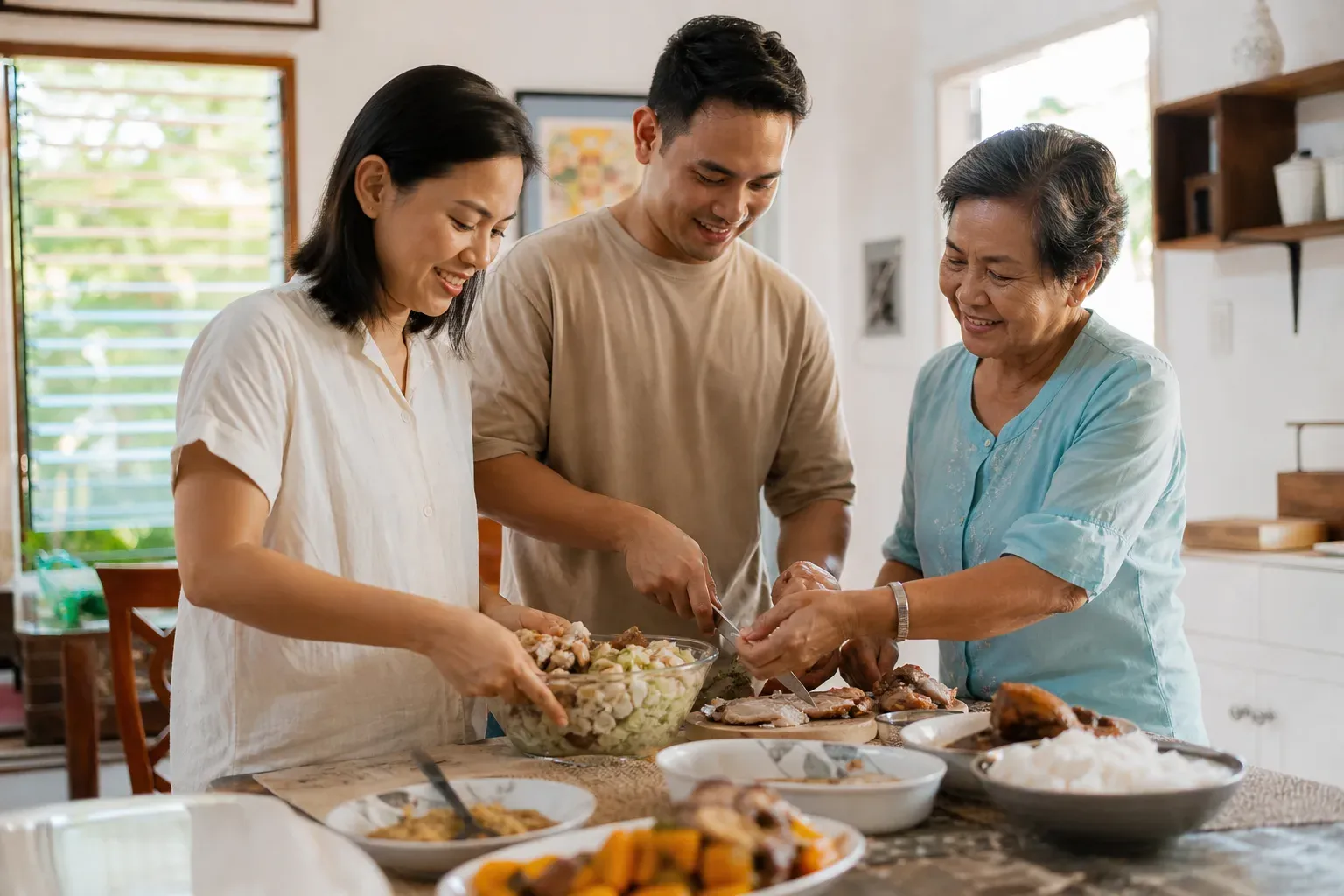
Family centeredness is one of the strongest Filipino values of all. When you date a Filipina, you are, in a real sense, getting to know her whole family. Parents and siblings often have a voice in serious relationships, and their approval carries weight.
This closeness is a feature, not a burden, once you understand it. A traditional step called pamamanhikan, a formal visit to the woman’s family to express serious intentions, still exists in many families when marriage is on the horizon. To understand how this influence works day to day, see our guide on Filipina family dynamics in dating.
Faith and bahala na: religion and acceptance
The Philippines is a deeply religious country, and for many Filipinas, faith shapes how a relationship should be conducted, from the pace of intimacy to the seriousness of commitment. Related to this is bahala na, an attitude of accepting what comes and trusting that things will work out, which can look like calm resilience in the face of uncertainty.
You do not have to share her faith, but respecting it matters. Dismissing religion, or treating her values as something to argue her out of, rarely ends well. Our guide on religion and dating in the Philippines covers how to navigate this with respect.
How these values show up when you date a Filipina
Put together, these values point to a simple approach that works. A few practical do’s and don’ts:
- Do show genuine interest in her family, and treat her parents with warmth and respect.
- Do raise problems privately and gently, protecting her dignity in front of others.
- Do move at a patient pace and let trust build through consistency.
- Do learn to read softer signals like tampo instead of demanding bluntness.
- Don’t embarrass her in public or criticize her family, even as a joke.
- Don’t treat generosity as leverage or keep score of favors.
- Don’t pressure her for intimacy, personal contact details, or fast decisions.
None of this asks you to lose yourself or walk on eggshells. It asks you to lead with respect. When a Filipina feels that you understand where she comes from, she relaxes, opens up, and meets you halfway. That is when a real relationship starts to grow. For a wider view of the culture beyond dating, our Filipino culture guide for Western men is a good companion read.
Meeting a Filipina who shares your values
Understanding these values is the first step. The next is meeting someone genuine who is looking for the same serious, respectful relationship you are. That is exactly who FilipinaMeet is built for. You can meet Filipina women who value commitment, family, and sincerity, and start conversations at your own pace on a platform that prioritizes real profiles and safety.
If you want to see how the plans work before you begin, our pricing page lays out the free and premium options clearly. There is no pressure to rush. Take the time to understand her world, and let the connection build from there.
Questions, answered
Frequently asked questions
What are the most important Filipino values in relationships?
The values that shape Filipino relationships most are kapwa (shared identity), hiya (a sense of propriety), utang na loob (a debt of gratitude), pakikisama (harmony and getting along), amor propio (personal dignity), delicadeza (tact), and galang (respect for elders). Family closeness and faith sit alongside these as major influences.
What does hiya mean in a relationship?
Hiya is a sense of propriety and the wish to avoid shame or embarrassment. In a relationship it explains why a Filipina may be indirect, avoid public arguments, and feel deeply hurt by public criticism. The practical takeaway is to protect her dignity and handle disagreements privately.
What is utang na loob?
Utang na loob is a lasting debt of gratitude for meaningful kindness. It is deeper than a simple thank you and creates a sincere wish to repay care over time. In a healthy relationship it should never be used as leverage, and generosity should come from genuine care rather than obligation.
Why is family so important in Filipino relationships?
Filipino culture is built on kapwa, a shared sense of self that connects a person to family and community. Because of this, parents and siblings often take part in serious relationships and their approval carries real weight. Respecting that closeness is one of the fastest ways to earn trust.
How do I show respect to a Filipina and her family?
Show galang, or respect, especially toward elders. Be warm and humble when you meet her parents, use polite manners, praise her in public, raise concerns in private, and never criticize her family. Consistency and patience matter more than expensive gifts or grand gestures.