
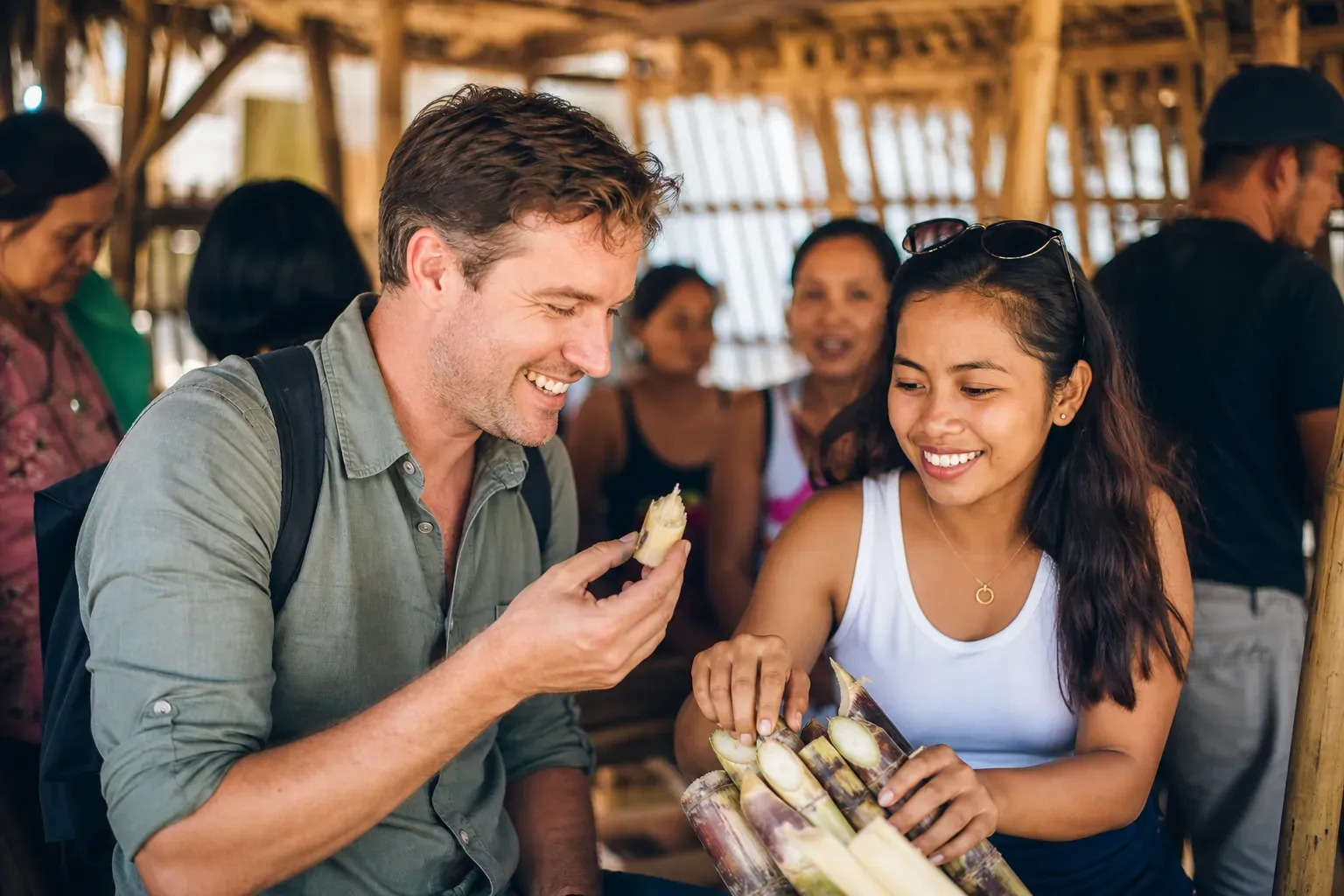
If you are dating a Filipina, or hoping to, it helps to understand the tradition she grew up inside. Courtship in the Philippines is not quite like dating in the West. It moves at a different pace, it involves her family more than you might expect, and it rewards patience and sincerity over flash. You do not need to perform old customs to succeed, but understanding them tells you what your behavior is actually saying to her and to the people who matter to her.
What is courtship in the Philippines?
Courtship in the Philippines, traditionally called panliligaw (the act itself is ligaw), is the period in which a man shows serious, sustained effort to win a woman’s affection and, just as importantly, her family’s trust. The heart of it is proving reliability and sincerity over time rather than through grand romantic gestures. Modern Filipino dating moves faster and uses phones instead of home visits, but those same values, patience, respect, consistency, and family involvement, still shape how relationships form.
Key courtship terms to know
A few Filipino words come up again and again. Knowing them helps you read the culture:
- Ligaw / panliligaw is courtship itself, the pursuit. Traditionally the effort falls on the man to prove his intentions.
- Harana is serenading a woman outside her home, historically with a guitar and friends. Rare today, but it captures the value placed on public, effortful romantic gestures.
- Paninilbihan is showing love through service, a suitor helping the woman’s family with chores or tasks to prove he is dependable.
- Pasalubong is the tradition of bringing a small gift when you visit, for her or her family.
- Pamanhikan is the formal meeting where the man and his family visit the woman’s family to ask for her hand and discuss the couple’s future. Unlike the others, this one is still widely practiced today, even among modern Filipinas.
How traditional courtship worked
In the traditional model, a man did not simply ask a woman out. He courted her, often for weeks or months. He visited her home, got to know her parents and siblings, performed small acts of service, and showed patience even when she gave no clear answer yet. The woman, sometimes with her family watching, tested his sincerity by staying reserved. Her parents, especially her father, weighed whether he was a worthy suitor.
The point was never a single big gesture. It was steady proof of character. A man who showed up consistently, treated her family with respect, and did not push for a quick answer was taken seriously. A man who was impatient, boastful, or disrespectful was not.
Modern courtship in the Philippines
Modern courtship is faster and usually digital, but the scoring system is remarkably similar. Home visits have become video calls and daily messages. She is still watching for the same signals her grandmother looked for: Is he reliable? Does he respect my time? Is he patient when I need space? Is he serious?
Consistency still beats intensity. A simple good morning message every day carries more weight than one extravagant gesture followed by silence. Following through on plans, remembering the details she shared, and being honest about what you want are the modern forms of the same old courtship. The main shift is that many Filipinas today, especially in cities, will tell you directly where they stand if you create a safe space for that conversation. Ask clear, kind questions and listen to the answers.
The family’s role
In courtship, winning over the family was almost as important as winning over the woman, and that has not really changed. When a relationship turns serious, meeting her family is a major milestone, and pamanhikan may follow if marriage is on the table. Expect her parents to ask about your work, your plans, and your intentions. It can feel direct, but it comes from genuine care for their daughter.
Approach it with warmth. Bring a small pasalubong when you visit, food, something from your country, or a gift for her mother. Be ready to eat, because Filipino hospitality almost always means a meal, and refusing food can read as rude. If her family is cautious about a foreign suitor, do not take it personally. It usually comes from stories they have heard of other women being misled, and your steady behavior over time is what earns their trust. Our guide on Filipina family dynamics in dating goes deeper on this.
Why foreigners should understand this
You do not have to chop firewood or hire a guitarist. What matters is grasping the values behind the customs and letting them shape how you show up. When a Filipina sees that you are patient, consistent, and respectful of her family, she is reading those behaviors through a cultural lens generations deep.
A lot of foreign men stumble in Filipino dating not because of the culture gap itself, but because they miss the signals courtship culture makes visible. Impatience reads as a lack of seriousness. Inconsistency reads as dishonesty. Ignoring her family reads as selfishness. Understanding the context helps you avoid those misreadings. And remember, culture is a guide, not a rulebook. Every woman is an individual, so learn the traditions, respect them, then adapt to the person in front of you. For more on how these norms show up day to day, see Filipina courtship signals and our broader Philippines dating culture guide.
Putting it into practice
The simplest way to honor this tradition in a modern relationship is to be steady and sincere from the start. Be clear about your intentions, keep your communication consistent, and let the relationship build at a comfortable pace. When you are ready to meet someone with that mindset, you can meet Filipina women who are looking for something serious, and let a patient, honest approach do the work.
Related reading
Questions, answered
Frequently asked questions
What is courtship called in the Philippines?
Courtship is traditionally called panliligaw, and the act of courting is ligaw. It refers to the period when a man shows sustained, sincere effort to win both a woman and her family's trust, valuing patience and consistency over grand gestures.
What is harana in Filipino courtship?
Harana is the traditional practice of serenading a woman outside her home, usually with a guitar and friends. She could accept the gesture by opening her window. It is rarely practiced today but symbolizes the effort and sincerity that Filipino courtship values.
What is pamanhikan?
Pamanhikan is the formal meeting where a man and his family visit the woman's family to ask for permission to marry and to discuss the couple's future. Unlike most old customs, it is still widely practiced among Filipinos today.
Do modern Filipinas still expect traditional courtship?
Most urban Filipinas in their 20s and 30s do not expect full traditional courtship, but many still appreciate the values behind it: respect, consistent effort, patience, and a genuine relationship with their family.
How is courtship in the Philippines different from Western dating?
It tends to be slower, places more of the early effort on the man, and involves family much earlier and more heavily. The underlying goal, a sincere and committed relationship, is the same, but the pace and the role of family set it apart.