
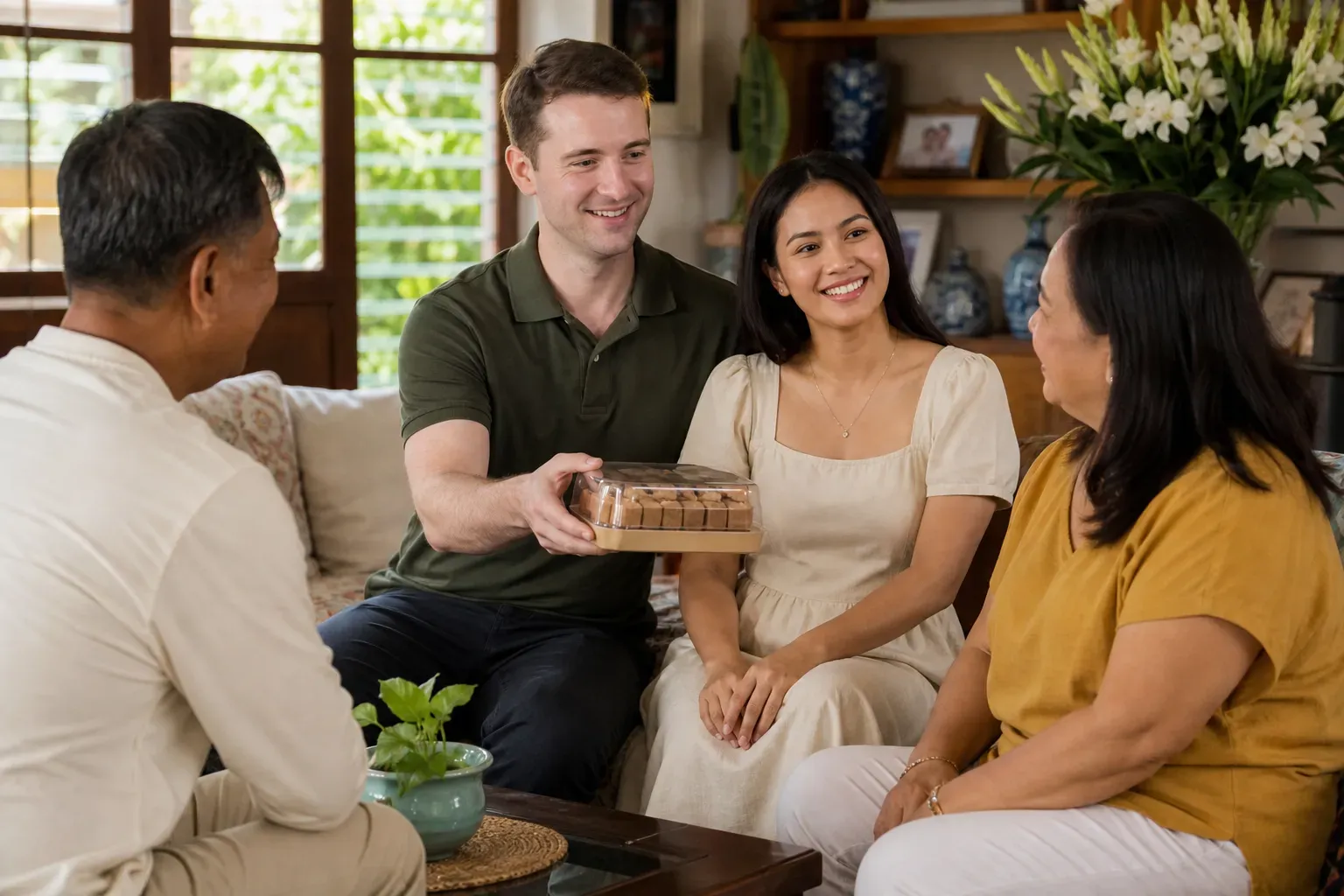
Meeting Filipina Parents Is Meaningful
Meeting Filipina parents often signals that the relationship matters. It does not automatically mean marriage is decided, but it usually means she wants her family to understand who you are.
Take the meeting seriously without acting stiff. Warmth, humility, and patience go a long way. You are not there to impress everyone with status. You are there to show that you respect her and the people important to her.
For many families, the meeting is also a safety check. They may want to know whether you are real, whether your intentions are serious, and whether their daughter seems comfortable around you. That is especially true when the relationship began online or involves distance, age gap, or travel from another country.
What to bring and how to greet them
A small gift is a thoughtful gesture. Food, fruit, pastries, or something simple from your home country can work well. Avoid expensive gifts early because they can feel like pressure or showmanship.
Use polite greetings, learn names, and follow the household rhythm. If people are eating, join respectfully. If elders are present, show extra courtesy. Small moments of attentiveness often matter more than big speeches.
Ask your girlfriend what is appropriate before you arrive. A gift that is perfect in one household may feel too much in another. If you are meeting in a restaurant, offering to cover the meal may be appreciated, but do not turn the bill into a performance. Quiet generosity is usually better than trying to look wealthy.
If you know a few polite phrases, use them lightly. You do not need perfect Tagalog, Cebuano, Ilocano, or another local language to show effort. A sincere greeting and a willingness to listen can soften the whole room.
Questions you may be asked
Parents may ask about your job, country, family, age, faith, previous marriage, children, or plans. These questions can feel personal, but they are often part of understanding whether you can be trusted.
Answer honestly and calmly. If something is complicated, explain it simply. Avoid defensive jokes or acting offended. A steady answer can turn a difficult question into a trust-building moment.
Prepare for practical questions, not only romantic ones. Where do you live? How often can you visit? Are you divorced? Do you have children? Would you expect her to relocate? What do you believe about marriage? You do not have to promise a final plan on the first visit, but vague answers can sound unserious.
If a topic is private, be respectful rather than evasive. You can say, “That is a longer story, but I want to be honest about it,” and answer in a simple way. The goal is not to pass an interrogation. The goal is to show that you can handle adult conversations without panic.
Mistakes to avoid
Do not overdo physical affection in front of her parents. Do not criticize Filipino customs, food, housing, traffic, or religion as if you are above them. Do not make jokes about taking her away from her family.
Also avoid private promises you cannot back up publicly. If you have not planned a visit, do not talk as if travel is already booked. Parents pay attention to whether your words sound grounded.
Other mistakes are quieter but just as damaging: checking your phone constantly, talking only to your girlfriend, ignoring elders, drinking too much, or turning every conversation back to yourself. If you are nervous, slow down. Ask questions, listen, and let the meeting breathe.
Do not compare her family to your own in a way that sounds superior. Different does not mean backward. Even if the home, meal, or schedule is unfamiliar, respond with gratitude and curiosity.
How to support her during the visit
Talk with her before the meeting about what would make her comfortable. Should you arrive at a certain time? Should you avoid certain topics? Does she want you to answer questions directly, or let her guide parts of the conversation? A little preparation prevents awkward moments.
During the visit, watch her cues. If she seems tense, do not push for a longer stay. If the family is warm, enjoy it without assuming every future decision is settled. Afterward, ask how she felt and whether anything you said landed poorly. That kind of follow-up shows that you care about her experience, not just the family’s opinion of you.
What a good first meeting accomplishes
A good first meeting does not need to be perfect. It should leave her parents with a clearer sense that you are real, respectful, and steady. It should leave her feeling that you took her family seriously. It should leave you with a better understanding of the people and expectations around her.
Meeting Filipina parents is easier when you treat it as relationship context rather than a performance. Be sincere, practical, and patient. Those qualities travel well across cultures.
Related reading
Questions, answered
Frequently asked questions
What should I expect when meeting a Filipina's parents?
Expect polite but direct interest in who you are, what you do, and whether your intentions are serious. The meeting is usually about trust, not a perfect performance.
What should I bring when meeting a Filipina's parents?
A small thoughtful gift, such as food, fruit, pastries, or something simple from your country, is usually enough. Avoid expensive gifts early because they can feel like pressure.