
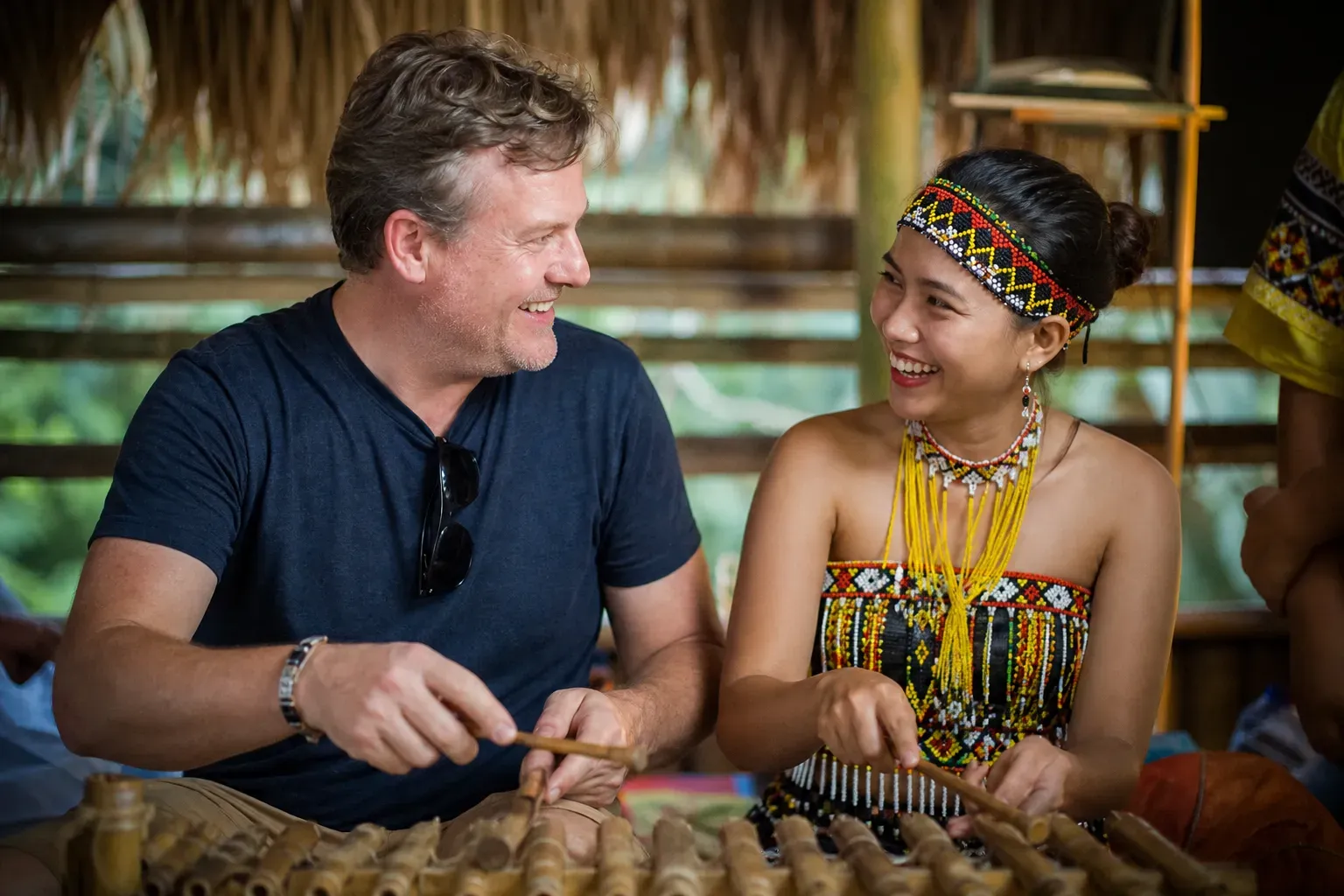
Filipino Culture: What Makes It Unique
Understanding Filipino culture is essential before visiting the Philippines, especially if you want to date respectfully. Filipino culture is often family-oriented, hospitable, faith-influenced, polite, and community-minded. English is widely spoken in many cities and tourist areas, but fluency varies by person, region, education, and comfort level.
The useful way to think about culture is context, not a checklist. Filipino people are not all the same. Some are traditional, some are modern, some are private, some are outgoing, and many move between those worlds depending on family, work, religion, and location.
The friendliness shock
Many Western visitors notice how warm everyday interactions can feel. People may smile, ask where you are from, help with directions, or make small talk more easily than you expect. That friendliness can be refreshing if you come from a place where strangers keep more distance.
Do not confuse friendliness with automatic romantic interest. Hospitality is part of many social settings, and people may be warm because they are polite, curious, or proud to welcome visitors. If you are dating, let interest become clear through consistent communication rather than assuming every smile means attraction.
Genuine curiosity and interest
Filipinos may be curious about your country, work, family, travel plans, and impressions of the Philippines. Some questions can feel direct, especially about age, relationship status, religion, or whether you have children. In many cases, the question is not meant to offend. It is a way to understand your place in the social picture.
You can answer warmly while keeping boundaries. A simple, honest answer is usually better than sarcasm or defensiveness. Curiosity works both ways: ask about her hometown, family traditions, favorite foods, holidays, and what daily life is actually like for her.
Celebrations and family connections
Birthdays, anniversaries, graduations, fiestas, holidays, and family milestones can matter a lot. Celebrations often include food, relatives, neighbors, karaoke, church, or local traditions. In province areas, town fiestas and regional festivals can be major social events.
If you are invited, show appreciation. Bring something small if appropriate, greet people politely, and avoid acting as if the event exists to entertain you. Food and hospitality can carry emotional meaning, so gratitude matters.
You will feel like an alien
In some parts of the Philippines, especially outside major tourist areas, Western visitors can stand out. People may look, smile, ask questions, or use the word “foreigner” plainly. In many contexts it is descriptive rather than insulting.
“Hey Joe” is something some Western men hear, especially Americans. The phrase has roots in the G.I. Joe era and U.S. military history in the Philippines. Tone matters. Sometimes it is teasing, sometimes friendly, sometimes simply a way to get attention. A relaxed smile usually works better than irritation. Another word you may hear once you are dating a Filipina is AFAM, a playful term for a foreign partner.
If standing out makes you uncomfortable, remember that your reaction is part of your cultural adjustment. Stay humble, dress appropriately for the setting, and avoid behaving as if local attention gives you special status.
Apply the Golden Rule
Most social situations go better when you are polite, patient, and humble. Do not talk down to people because of income, accent, housing, food, traffic, or local customs. Respect is noticed quickly, and disrespect is remembered quickly.
This matters in dating too. If you complain constantly about the Philippines, mock her family, or compare everything unfavorably to your country, you make the relationship feel unsafe. You do not have to pretend everything is perfect. Just separate practical frustration from contempt.
Communication can be indirect
Many Filipinos value harmony and may avoid blunt confrontation. A soft “maybe,” nervous laugh, silence, or change of subject can sometimes mean discomfort. This does not mean you should guess everything. It means you should ask gently and make it easy for someone to be honest.
When dating, avoid forcing immediate answers in public. If a topic is sensitive, give space and revisit it calmly. Directness is useful when it is kind; it becomes a problem when it turns into pressure.
Connect with locals before arrival
Understanding Filipino culture is one thing, experiencing it with a local guide is another. Meet Filipinas on FilipinaMeet who can introduce you to authentic Filipino family life and customs.
The best cultural guide is not a stereotype. It is a real person who trusts you enough to explain what matters in her life. If you approach Filipino culture with curiosity, humility, and practical respect, you will understand far more than any checklist can teach.
Related guides
Questions, answered
Frequently asked questions
What are Filipino people like?
Many Filipinos value family, faith, hospitality, politeness, humor, and community, but personalities vary widely. Treat culture as context, not a script.
Why are Filipinos so friendly to foreigners?
Hospitality, curiosity, English fluency, and community warmth can make visitors feel welcome. Be friendly back without assuming every interaction is romantic interest.
What does "Hey Joe" mean in the Philippines?
It is an informal phrase some Filipinos use for Western men, especially Americans, with roots in the G.I. Joe era. Tone matters, so respond lightly and respectfully.