
Budgeting for Dating in the Philippines
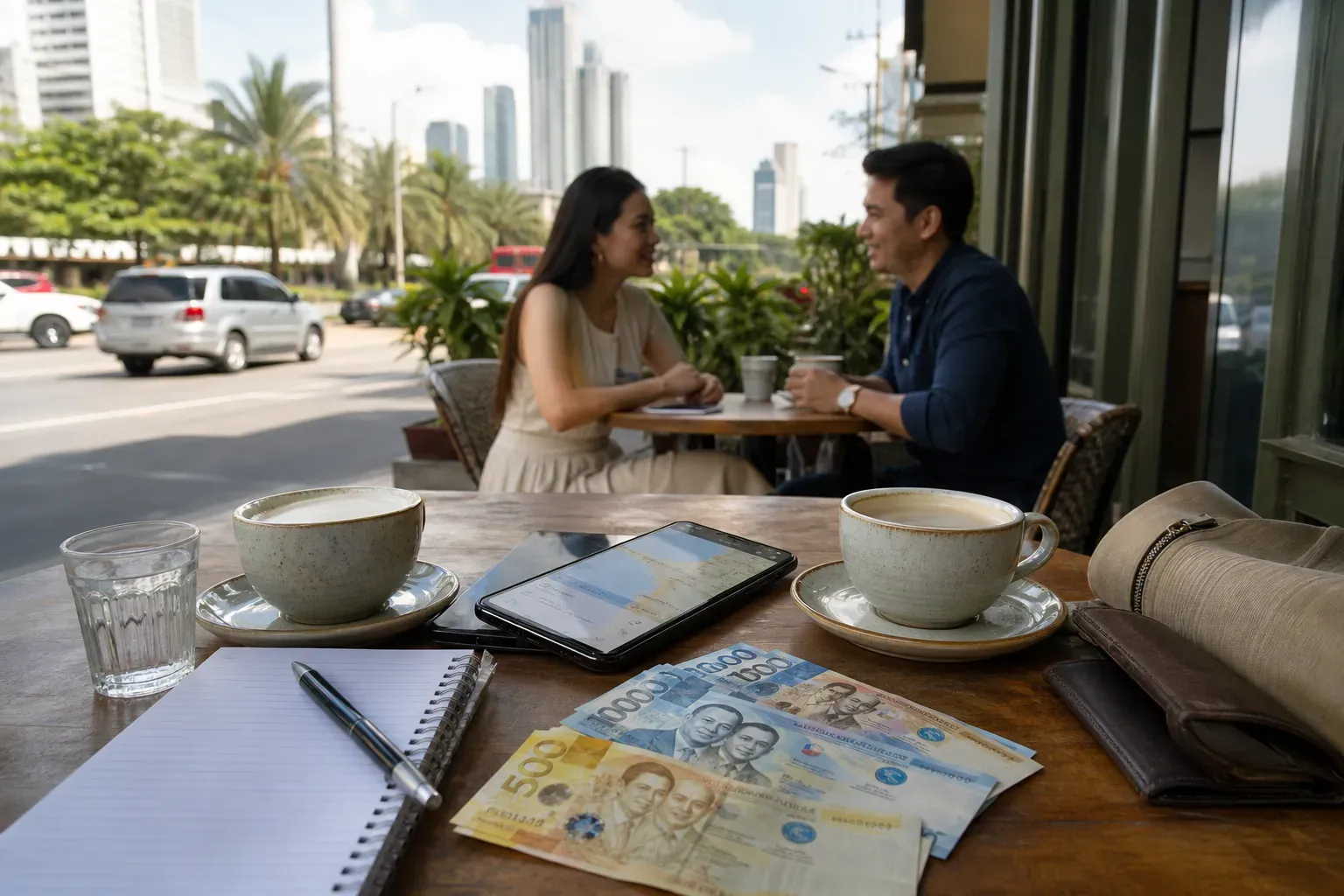
Budgeting for dating in the Philippines means planning for realistic, respectful dates rather than chasing the cheapest possible version of romance. The Philippines is affordable by Western standards, but “cheap” is not the goal — being realistic and consistent is. Below are real figures (in pesos and US dollars, at roughly ₱58 to $1) so you can plan a budget that lets you date comfortably without overspending or signaling the wrong things.
Cost of Individual Dates
| Date type | Pesos (₱) | US dollars |
|---|---|---|
| Coffee / café date | 200–500 | $4–9 |
| Casual meal for two | 600–1,500 | $10–25 |
| Mid-range / upscale dinner | 2,000–4,000 | $35–70 |
| Two movie tickets | 600–1,000 | $10–18 |
| Mall date (food + movie + coffee) | 1,500–3,000 | $25–50 |
| Grab / taxi across the city | 200–500 | $4–9 |
A first date is best kept simple and low-pressure — a café or a casual restaurant in a mall is perfect, and it keeps the early budget modest while you figure out compatibility.
Accommodation
Where you stay drives a big share of trip cost:
- Budget hotel / guesthouse: ₱1,000–1,800/night ($17–31)
- Mid-range hotel (most travelers): ₱2,500–5,000/night ($40–85)
- Upscale / international chain: ₱6,000+/night ($100+)
A clean, well-located mid-range hotel in a safe district (Makati or BGC in Manila; IT Park or Ayala in Cebu) is the sensible default — central enough to keep date logistics easy.
Transport
- International flights from the US/Europe: roughly $700–1,200 round trip, higher around December and Holy Week (see best time to visit the Philippines for dating).
- Domestic flights between cities: $30–80 one way.
- Grab (rideshare) is the easiest and safest way around cities; budget ₱1,000–1,500/day if you move around a lot.
A Sample Week-Long Trip
Excluding international airfare, a comfortable seven-day dating trip in Manila or Cebu:
- Hotel (7 nights, mid-range): ~$350–500
- Dates and meals: ~$200–400
- Transport (Grab): ~$70–120
- Misc (data SIM, incidentals): ~$50
On-the-ground total: roughly $700–1,500, plus flights. Smaller cities can cut this by 30–40%.
Build a Dating Budget by Trip Stage
Your budget should change as trust grows. Before you travel, spend mainly on platform access, video calls, and trip planning. During a first visit, spend on public dates, safe transport, and a hotel in a convenient area. Save bigger gestures for a relationship that has already shown consistency in person.
For a first trip, separate your money into three buckets:
- Fixed costs: flights, hotel, travel insurance, passport or visa needs, and airport transfers.
- Date costs: coffee, meals, rideshares, activities, and small shared experiences.
- Buffer: weather delays, missed flights, illness, extra transport, or a date that goes well enough to extend.
That buffer matters. A tight budget can push you into bad decisions, like staying far from safe meeting areas, skipping backup transport, or accepting help from someone you barely know.
Handling Money the Right Way
This is where budgeting becomes about judgment, not just numbers:
- Never send money to someone you have not met. Early requests — a hospitalized relative, a stolen phone, “load” for messaging — are the most common scam script. Read our Filipina dating red flags guide before you travel.
- Pay for dates you initiate, especially early on; it is the cultural norm and good manners. But generosity should be proportionate, not a performance.
- Keep allowances out of early dating. Ongoing financial support is a decision for committed relationships with its own nuances — see filipina girlfriend allowance and the real cost of dating a Filipina. It should never be the price of attention.
Free and Low-Cost Ways to Build Connection
Plenty of what matters costs nothing. Long video calls before you travel, learning a few Tagalog phrases, and a thoughtful low-key first date often build more trust than expensive dinners. Starting on a reputable dating platform with free messaging also lets you have real conversations before you spend anything on a trip.
When to Spend More and When to Stop
Spend more when the relationship has earned it: you have had video calls, stories are consistent, you have met safely, and both people are planning realistically. A nicer dinner, a day trip, or helping with reasonable transport can make sense once trust exists.
Stop or slow down when spending starts replacing compatibility. If every plan becomes more expensive, if emergencies appear whenever you set a boundary, or if she measures seriousness only by money, the budget is telling you something. A healthy dating budget supports connection; it does not buy it.
Related reading
Questions, answered
Frequently asked questions
How much does a date in the Philippines cost?
A coffee date runs about ₱200–500 ($4–9). A casual restaurant meal for two is roughly ₱600–1,500 ($10–25), and a nice dinner in an upscale Manila or Cebu district can be ₱2,000–4,000 ($35–70). A full mall date with food, a movie, and coffee typically lands around ₱1,500–3,000 ($25–50).
What is a realistic daily budget for a dating trip?
Excluding international flights, $50–80 a day covers comfortable dating, food, and transport in Manila or Cebu, including a mid-range hotel. A week-long trip usually totals $700–1,500 on the ground, with flights from the US adding roughly $700–1,200 round trip.
Should I send money before I meet someone?
No. Never send money to someone you have not met in person, no matter the emergency described. Early or escalating money requests are the most common romance-scam pattern. Legitimate partners do not ask online strangers for financial help.
Is an allowance normal when dating a Filipina?
Regular financial support is a separate decision that belongs to committed relationships, not early dating, and it carries real cultural and practical nuance. It should never be a precondition for someone talking to you.