
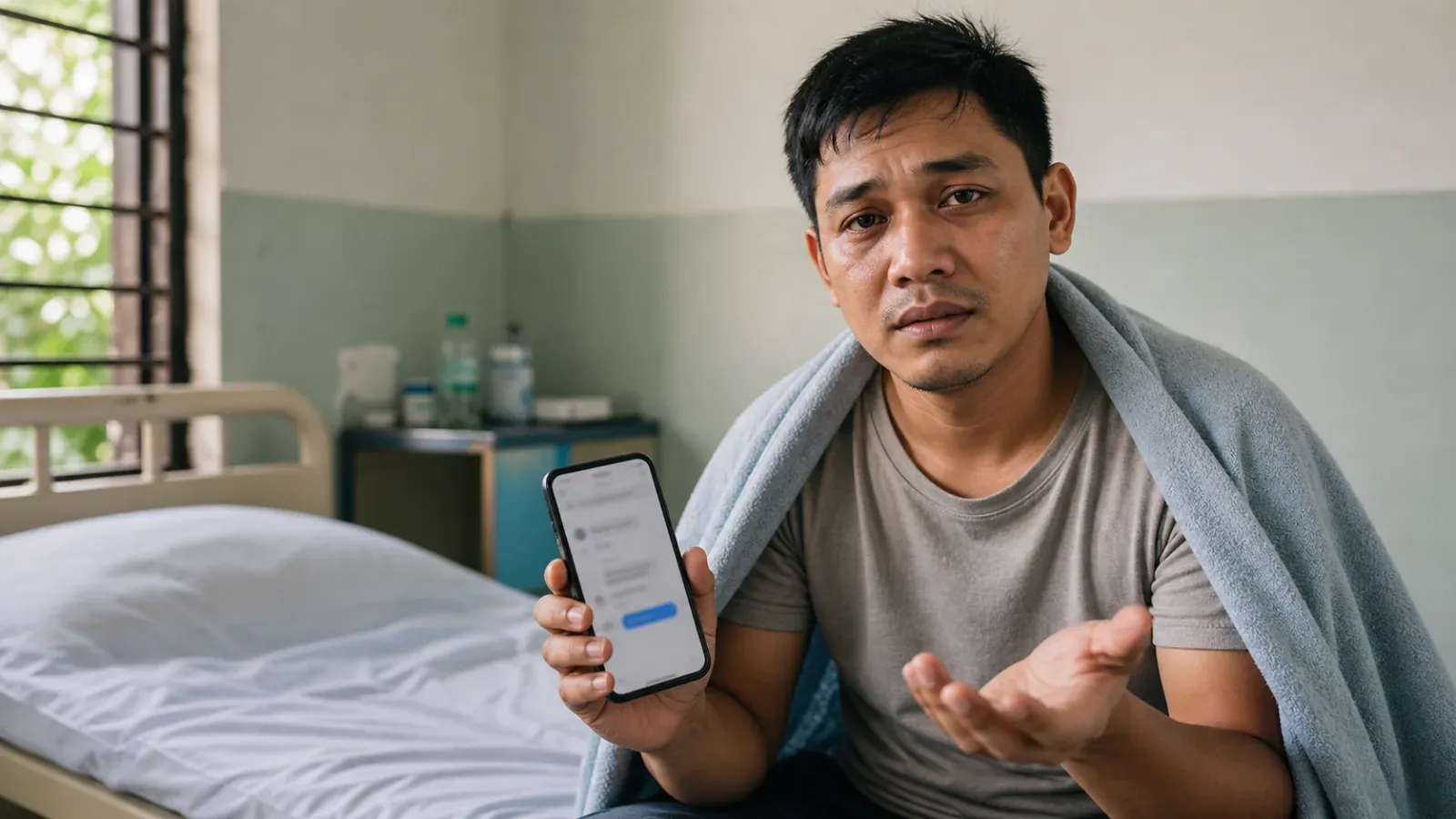
The message lands with a jolt: her brother collapsed, was in an accident, or was admitted overnight, and the hospital wants a deposit before they will continue treatment. Often there is a deadline attached, a doctor’s name, a photo of a bill, and the quiet implication that you are the only person who can help in time.
Before anything else, hold one line steady: you do not move money to someone you have only ever known through a screen. A sick relative is one of the most sympathetic stories a person can tell, which is precisely why fraud rings reach for it. The harder it tugs, the more reason to slow your response down rather than speed it up.
Why Filipina Asking Money for Sick Brother Stories Work
Filipina asking money for sick brother stories work on a foreigner’s instincts in three ways at once. A hospital emergency feels time-sensitive, so you act before you think. It targets family, so refusing feels cold toward someone you may genuinely like. And it sits in another country, where you cannot drive to the ward or call the front desk yourself to confirm a single detail.
None of that means every sick brother is invented. Filipino families do face real medical bills, and many women on dating apps are exactly who they say they are. The question is not whether a brother could be ill. It is whether a person you met online weeks ago should be the one funding his care, and why the cost keeps landing on you rather than on relatives, neighbors, or local aid who are actually nearby.
Read the rhythm, not just the receipts
Pay attention to timing. If the crisis surfaces right after a stretch of intense affection or talk of a shared future, that sequence is a known pattern, not a coincidence. Watch what happens when you ask a calm question or say you need a day. A real person worried about her brother will usually welcome your concern. A script tends to escalate instead: the brother worsens, a second bill appears, or you suddenly become the villain for hesitating.
Be especially careful about where the funds are headed. Requests to send to a cousin’s account, a “hospital cashier,” or a name that is not hers are a strong sign the money trail is being hidden. Real hospitals do not collect deposits through a stranger’s e-wallet.
A way to respond that stays kind and firm
You can show warmth without opening your wallet. Something like, “I’m really sorry he’s unwell, and I hope he recovers fast, but I don’t send money to people I haven’t met in person yet,” keeps you human and immovable at the same time. Skip the long debate about the medical details, because arguing the story is the trap. The only thing you need to hold is the boundary itself.
If you want to do something, point toward local options: PhilHealth coverage, the hospital’s own social services or charity ward, or her family pooling resources. Genuine affection survives a no. A connection that evaporates the moment cash is off the table was about the cash.
If pressure keeps coming, switch from explaining to recording. Save the profile, the chat history, the account names, numbers, and any wallet handles, then report the account to the platform. In the U.S., the FTC and the FBI Internet Crime Complaint Center (IC3) both take these reports, and acting quickly gives any reversal the best chance.
What a Safer Next Step Looks Like
If the connection feels real and you do not want to disappear coldly, move the conversation toward verification rather than debate. Ask for a short live video call where she can explain what happened without rushing you, and make it clear that you will not send deposits, reimbursements, or third-party transfers. If she truly needs support, she can work with local relatives, hospital social services, barangay assistance, or the hospital’s own payment office.
Do not let receipts become the relationship. A person who wants a future with you should be willing to build trust in ordinary ways first: consistent calls, patience with your boundaries, and no punishment when money is off the table. That slower pace protects both your heart and your account.
Official resources
- FTC Romance Scams — consumer guidance on romance scammers who build trust before asking for money
- FBI Romance Scams — FBI overview of romance and confidence fraud tactics
- FBI IC3 — Internet Crime Complaint Center — report cyber-enabled fraud and money-loss incidents
Related reading
Questions, answered
Frequently asked questions
Why do romance scams so often use a sick or injured brother?
A sibling medical crisis sounds urgent, sympathetic, and hard to disprove from overseas. It lets the requester demand a fast deposit while making you feel heartless for asking questions, which is exactly the reaction a scammer is trying to trigger.
She sent a hospital bill and a doctor's name. Does that prove the emergency is real?
No. Bills, admission slips, and prescriptions are easy to fake, reuse, or pull from the internet. Documents prove nothing about who is messaging you or where your money would actually go, so they should not replace a live identity check.
What if I already wired money for the hospital deposit?
Stop any further transfers, then contact your bank or money-transfer service immediately because some payments can still be recalled. Keep every receipt and chat log, report the account to the dating platform, and file with the FTC and the FBI Internet Crime Complaint Center if you are in the U.S.