
Filipina Dating Family Expectations Explained
Filipina dating family expectations help foreign men navigate relationships in the Philippines with respect and clarity. In Filipino culture, family is not a background factor — it is central to identity, decision-making, and daily life. When you date a woman from the Philippines, you are not entering a relationship with just one person. You are building a connection with her entire family network.
This is not a warning or a complication. For many foreign men, the closeness of Filipino families becomes one of the most rewarding aspects of the relationship. But it does require understanding, patience, and a willingness to adapt your expectations.
Why Family Matters So Much in Filipino Culture
The Philippines has a collectivist culture where family loyalty runs deep. Many Filipinos grow up in multigenerational households where grandparents, parents, and children live under one roof. Financial responsibilities are shared, decisions are discussed collectively, and major life events are family affairs.
This means that when a woman enters a serious relationship, her family will naturally be involved. Her mother will want to know about you. Her siblings may ask questions. Her father may be reserved at first but will be watching how you treat his daughter. This involvement is not interference — it is an expression of love and protection.
For foreign men who grew up in cultures that prioritize individual independence, this dynamic can feel unfamiliar. The key is to approach it with curiosity rather than resistance. Her family’s involvement is a sign that she comes from a stable, caring environment, and earning their respect will strengthen your relationship significantly.
When and How You Will Meet the Family
In many Filipino relationships, meeting the family happens relatively early — sometimes within the first few months if the relationship shows serious potential. This is different from many Western cultures where family introductions might not happen until much later.
The timing often depends on the woman and her family’s location. If she lives with her parents, you may meet them naturally when picking her up for a date. If she lives in a different city, a formal visit may be planned once the relationship reaches a certain level of commitment.
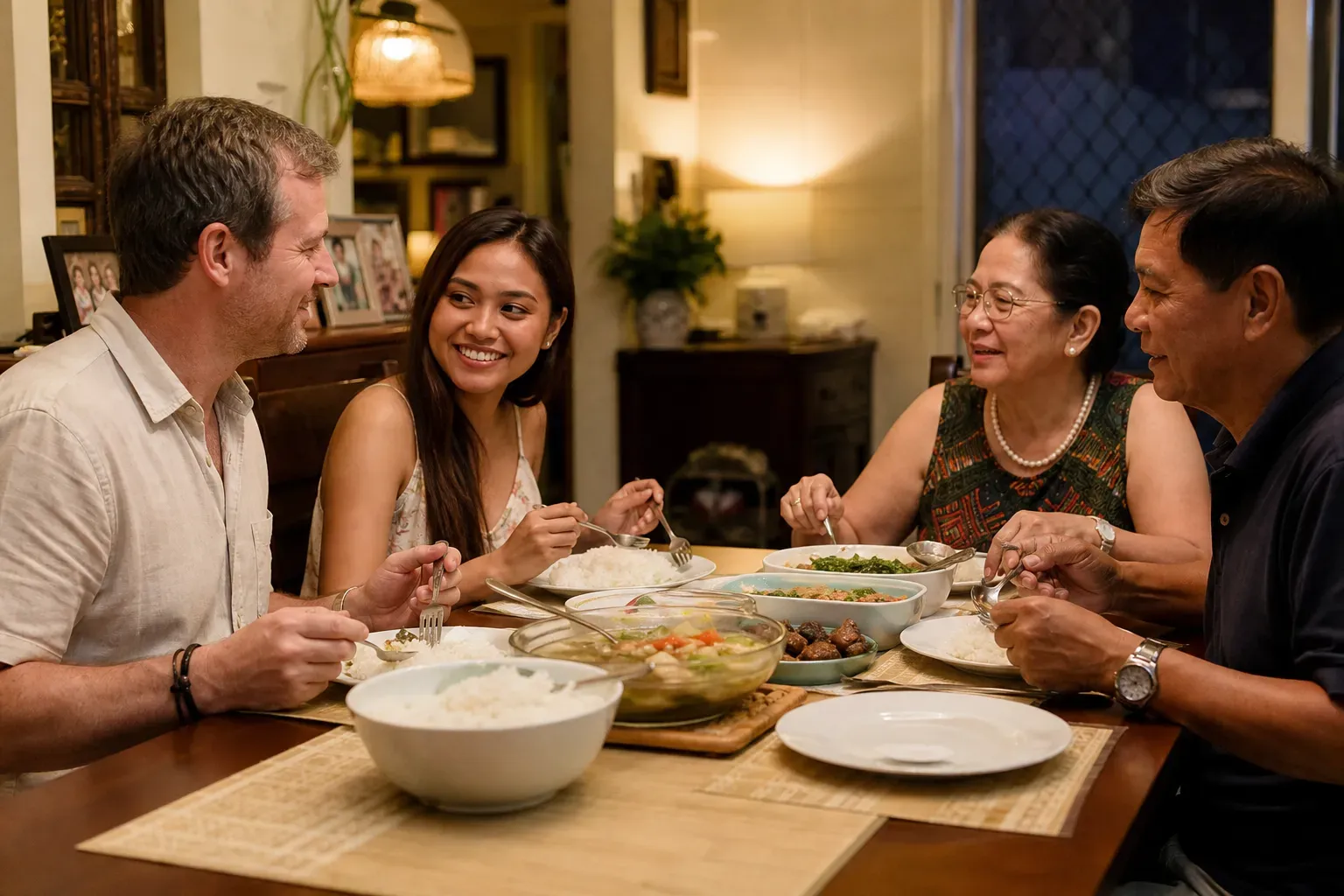
When the introduction happens, treat it as a significant occasion. Dress neatly and conservatively. Bring a gift — food is always welcome, and items from your home country are appreciated. Be prepared for a meal, because Filipino hospitality centers around food. Refusing what is offered can be seen as impolite, so accept graciously.
During the visit, be warm and respectful. Address her parents formally unless invited to do otherwise. Show genuine interest in their lives by asking about their work, their town, or their other children. Avoid dominating the conversation or talking only about yourself. Listening and showing humility go a long way.
Financial Expectations and Family Support
One topic that often concerns foreign men is the financial dimension of Filipino family relationships. In many families, working children are expected to contribute to household expenses, support younger siblings’ education, or help with medical bills. This practice is deeply rooted in cultural values and is not unique to relationships with foreigners.
When dating a woman from the Philippines, you may eventually encounter discussions about financial support for her family. This is not inherently a red flag. Many well-educated, financially independent women still send money home because they view it as a moral obligation and a source of pride.
The key is timing and context. If financial requests come before you have built genuine trust and commitment, that deserves a direct conversation. If they arise naturally after a serious relationship has developed, they are likely a reflection of normal family dynamics.
Be honest about your own financial situation and boundaries. You do not need to support her entire family, and a reasonable woman will not expect that. What matters is that you approach the topic with respect rather than suspicion, and that you communicate openly about what you can and cannot do.
Navigating Different Expectations Between Cultures
Conflicts between family expectations and your own cultural norms are normal and manageable. The most common friction points include: how much time is spent with family versus as a couple, financial contributions to her family, and differing views on personal independence.
The solution is always communication. Talk about these differences openly and without judgment. Phrases like “In my culture, we usually handle this differently — can we talk about what works for both of us?” create a collaborative tone rather than an adversarial one.
Avoid ultimatums. Telling her she must choose between you and her family will almost certainly end the relationship. Instead, work together to find boundaries that respect both her family obligations and your comfort level. Compromise is possible, but it requires both partners to feel heard.
How to Build a Strong Relationship with Her Family
Building genuine rapport with her family takes time, but a few consistent actions make a significant difference. Visit when you can, even briefly. Call or video chat with her parents if you are in a long-distance phase. Remember names, birthdays, and details about family members’ lives.
Learn a few phrases in her local language. Even basic greetings in Tagalog, Bisaya, or Ilonggo will earn genuine warmth from her family. The effort matters more than the execution.
Participate in family gatherings when invited. Filipino family events — birthdays, fiestas, holidays — are large, loud, and centered around food. Show up, eat, and be sociable. You do not need to be the center of attention. Just being present and engaged shows that you take the relationship seriously.
Over time, her family will become your strongest advocates. When they see that you are consistent, respectful, and genuinely committed to their daughter, they will support the relationship wholeheartedly. That support can be invaluable during the challenges that come with cross-cultural relationships.
Practical Next Steps
If you are early in a relationship, ask her about her family. Find out how close they are, how often she sees them, and what role they play in her life. This gives you a roadmap for what to expect and shows her that you care about the full picture, not just the two of you in isolation.
As the relationship develops, be proactive about engaging with her family. Do not wait to be asked. Showing initiative in building those connections demonstrates the kind of seriousness and maturity that Filipino families value.
Related reading
Questions, answered
Frequently asked questions
Why are family expectations important in Filipina dating?
Family often influences trust, reputation, and long-term decisions. A serious relationship may eventually include parents, siblings, or close relatives.
When should I meet her family?
Meet family after the relationship has enough trust and clear intent. Too early can create pressure, while avoiding family forever can make you look unserious.
Do I need to impress the whole family?
You do not need to perform, but you should be polite, consistent, and respectful. Small signals like greeting relatives and keeping promises matter.
Should I discuss money with her family?
Avoid making financial promises to gain approval. If practical support ever becomes relevant, discuss it carefully after trust and boundaries are established.