
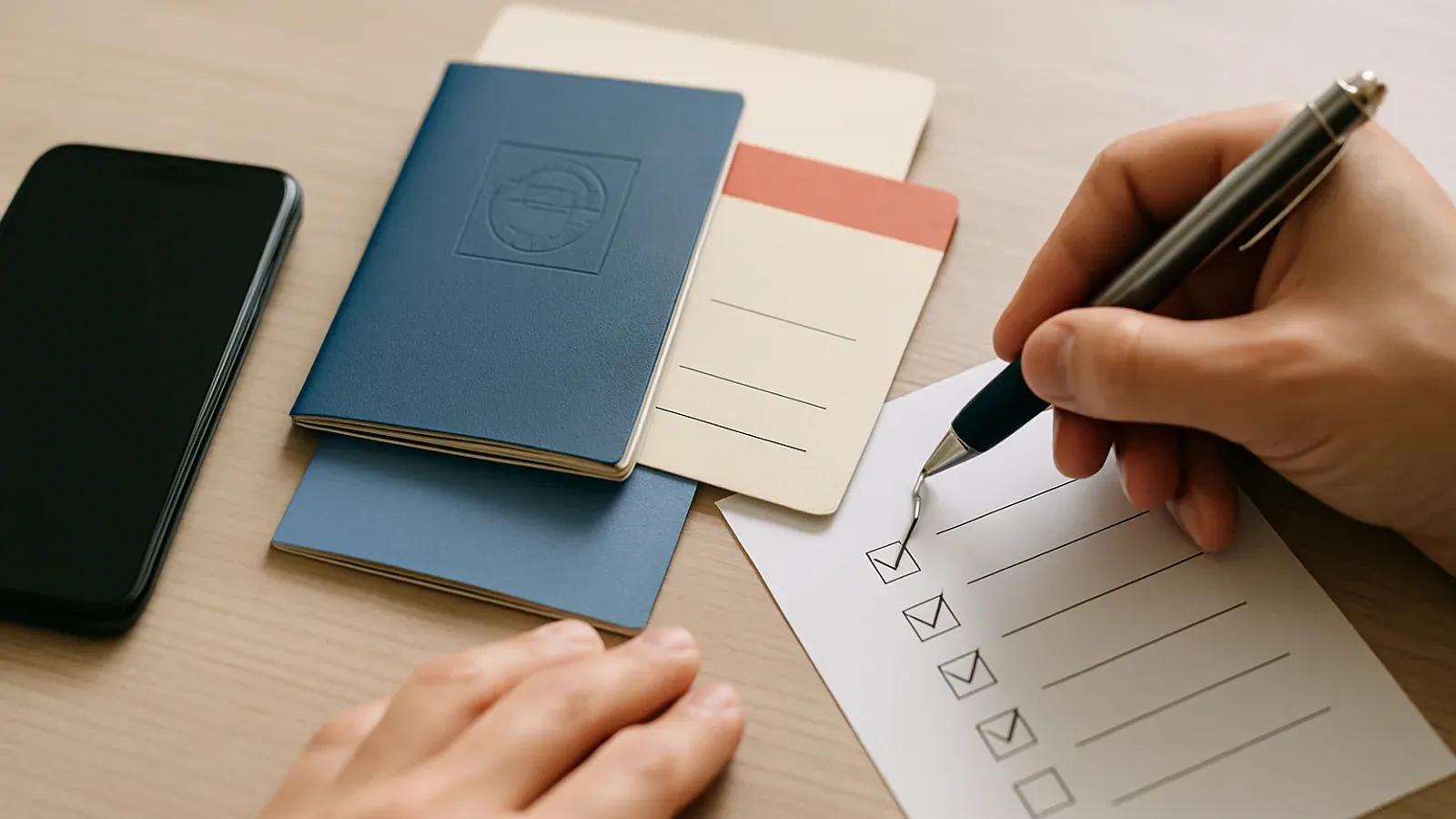
She says the two of you can finally meet, but first there is a fee: a passport renewal, a tourist visa, an immigration clearance, a travel permit, or an embassy processing charge. Sometimes a third party joins the conversation, a “travel agency” or an “immigration officer” who confirms the amount and the deadline.
What makes this version of a romance scam effective is how official it sounds. A bureaucratic fee feels different from “send me money.” It comes with a name, a reference number, maybe a document, and a process that seems to exist outside the relationship. That official packaging is exactly the point.
Why a Filipina Passport Fee Scam Sounds Official
Real travel documents follow public, published procedures, which is why a Filipina passport fee scam usually borrows official-sounding language. Philippine passport applications go through the Department of Foreign Affairs, and U.S. visa applications go through the embassy and USCIS, with fee amounts listed openly on government sites. None of those processes ask a foreign partner to pay a private “agent” by gift card, e-wallet, or international wire.
Scammers lean on the gap between you and a system you cannot easily check. A “clearance fee” from abroad is hard to confirm in the moment, so they invent vague charges, surprise penalties, and same-day deadlines that punish you for hesitating. The harder a fee is to look up, the more carefully you should treat it.
Check the Claim Before You Touch Your Wallet
You can usually defuse this scenario with research instead of payment:
- Look up the exact fee on the official DFA, embassy, or USCIS website and compare it to what you were told.
- Notice that genuine government fees are paid by the applicant in the Philippines, not by a partner overseas.
- Treat any payment routed through chat to an “agent” or “officer” as disqualifying on its own.
- Refuse to share passport scans, bank details, or identity documents, which can be reused for further fraud.
- Be most cautious when a penalty appears suddenly and demands payment within hours.
A request that cannot survive a five-minute check against an official page is not a request worth funding.
Holding the Line Without an Argument
You do not owe anyone a debate about this. A short, steady answer works: “I don’t pay passport or visa fees for someone I haven’t met. When we’re ready to plan a trip, we’ll handle the paperwork through official channels and pay the published amounts directly.” A sincere partner can be disappointed and still accept that. If the warmth in the conversation evaporates the moment money is off the table, you have learned what the relationship was actually about.
If You Feel Pressured or Already Paid
Shift from explaining to recording. Capture screenshots of the messages, the supposed agency or officer details, account names, wallet handles, phone numbers, and any documents or receipts. Report the profile to the platform you met on. If you sent money, contact your bank or payment service immediately, since some transfers can still be stopped or recalled.
In the United States, you can report to the FTC at reportfraud.ftc.gov and to the FBI Internet Crime Complaint Center at ic3.gov. Organized records make those reports far more useful.
Plenty of people on dating sites are sincere, and travel between countries really does involve paperwork. The skill worth keeping is the habit of separating affection from money until trust is earned in person, and of letting official sources, not a chat window, tell you what a document actually costs.
Official Channels Are the Filter
Use one filter for every passport, visa, immigration, or clearance claim: can you confirm it on an official government site, and can the applicant pay it through the normal process without your private transfer? If the answer is no, pause. Real document fees have names, published amounts, and standard payment instructions. They do not require secrecy, romance, or a same-day transfer to an individual.
Be especially cautious when a fake official joins the chat. A real embassy, airline, or immigration office will not negotiate inside a dating conversation. Once a third party appears only to pressure payment, screenshot everything and step away. Real paperwork creates records you can verify later; scam paperwork creates panic you are supposed to act on now.
Official resources
- DFA Passport Appointment System — official Philippine passport appointment portal
- U.S. Embassy in the Philippines — Important Visa Information — official visa fee and appointment guidance
- USCIS Avoid Scams — immigration scam prevention guidance from USCIS
- FTC Immigration Scams on Social Media — FTC guidance on fake immigration help and fake government websites
Related reading
Questions, answered
Frequently asked questions
Do real Philippine passport and visa fees ever get paid through a private agent over chat?
No. Legitimate Philippine passport fees go through the DFA, and U.S. visa fees go through official embassy and USCIS channels with published amounts. A self-described agent or officer collecting payment by GCash, gift cards, or wire transfer through a dating chat is not a real government process.
She sent a document that looks like an official clearance notice. Does that prove the fee is real?
Not on its own. Letterheads, reference numbers, and "immigration officer" badges are easy to fake and impossible to verify from a screenshot. Confirm any fee against the published schedule on the official DFA or embassy website rather than trusting a forwarded image.
What if I already paid a visa or clearance fee and now there is a second charge?
Escalating fees are a core part of this scam. Stop paying, keep every receipt and message, report the profile, and contact your bank or payment provider right away to ask whether the transfer can still be recalled.