
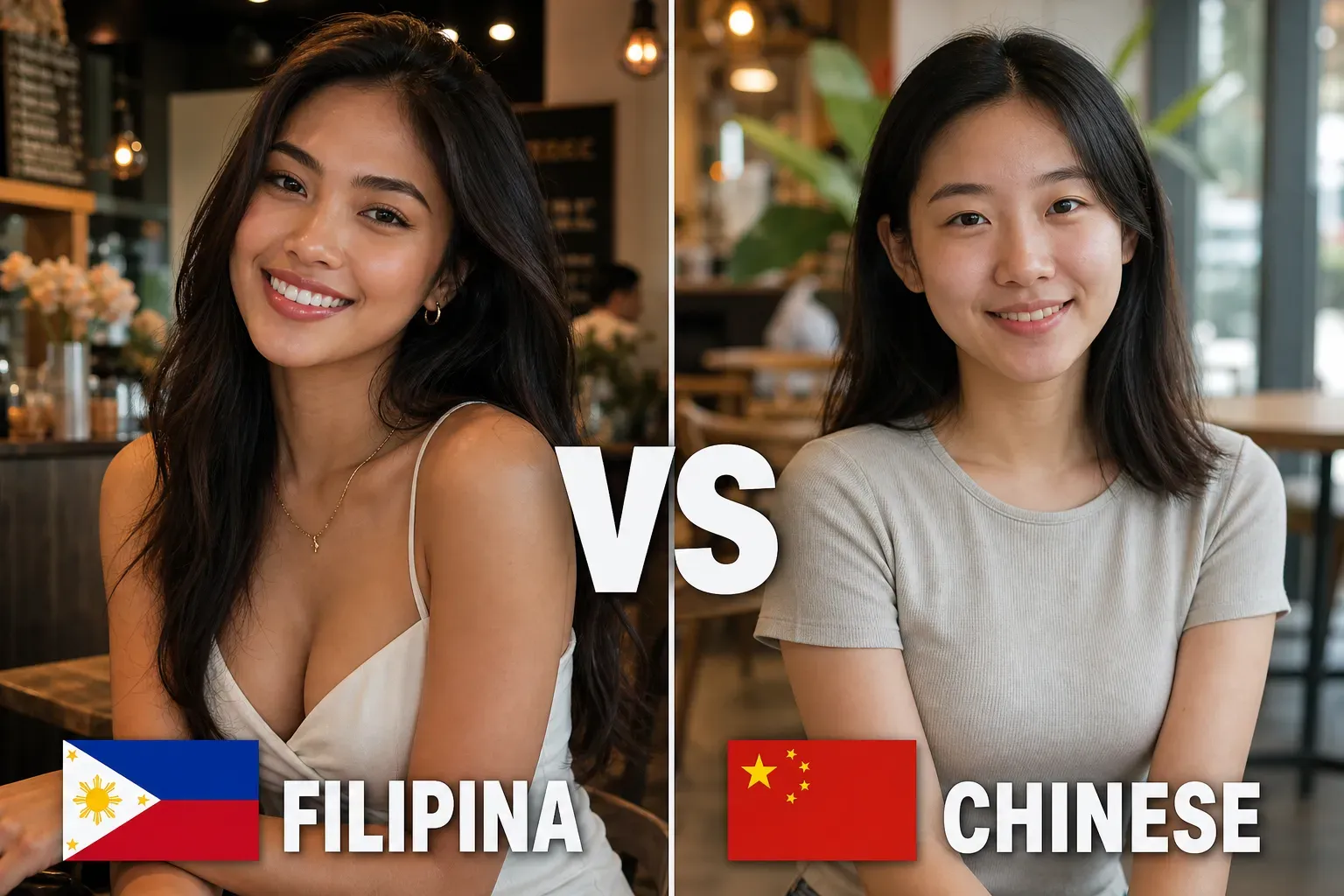
Filipina vs Chinese Dating: A Dating Comparison
Filipina vs Chinese dating is a comparison of dating environments, not a ranking of people. Both cultures can offer strong relationships, but communication style, pace, and expectations can feel different for foreigners. This guide highlights practical differences so you can choose a better fit.
The comparison matters because both cultures can be family-oriented, but the dating experience can feel different. Filipina dating often gives foreigners easier English communication and warmer early rapport. Chinese dating may involve more language preparation, city-by-city variation, and a more structured view of long-term suitability.
| Factor | Filipina | Chinese |
|---|---|---|
| Primary language with foreigners | English (widely spoken) | Varies by city and circle |
| Communication style | Warm, conversational | More formal early on |
| Dating pace | Flexible, conversational | More structured |
| Family involvement | Central, often early | Important, structured |
| Long-term orientation | Marriage and family-focused | Marriage and family-focused |
Communication and language
The Philippines generally offers easier day-one English communication, which can reduce friction early on. In China, English comfort may vary by city, education, job, and social circle. Clear, patient communication helps regardless of location and sets the tone for trust.
If language barriers exist, small efforts such as learning common phrases or using translation carefully can show respect and improve rapport.
Longer conversations also help clarify intentions before you plan a meeting. In Filipina dating, you may be able to discuss relationship goals, family, and travel plans earlier. In Chinese dating, the same topics may still matter deeply, but they can be filtered through language, family expectations, and practical stability.
Values and relationship pace
Both cultures tend to value family and long‑term commitment, but the pace and formality of dating can differ. Some environments are more structured early on, while others feel more conversational. Your best fit depends on how you prefer to build trust and how direct you want to be.
Consistency matters in both places. A clear, steady approach usually beats short bursts of intensity.
In Chinese dating, long-term suitability may include career direction, financial stability, family approval, housing, and future plans. In Filipina dating, sincerity, family respect, emotional consistency, faith, and realistic visit plans may be more visible early. Think about your comfort with planning, labels, and how quickly you like to define the relationship.
Social settings and expectations
In the Philippines, casual meetups and friendly conversation are common early on. First meetings may happen in malls, cafes, restaurants, or public places where comfort and safety are easy. In China, dating norms vary widely, but early dates may feel more formal or practical depending on city and background.
If you enjoy flexible plans and open conversation, the Philippines may feel more natural. If you prefer structure, serious planning, and are willing to handle a larger language gap, Chinese dating may suit you.
The key is to match your approach to the local norms rather than forcing your own style.
Family approval and commitment
Family matters in both cultures, but it may show up differently. A Filipina may talk about family early or consider how relatives feel about a serious relationship. In Chinese dating, family expectations can become important when the relationship moves toward long-term commitment, marriage, or relocation.
Do not treat family questions as interference. They often reveal whether the relationship has a realistic path.
Financial stability can also be interpreted differently. In Chinese dating, long-term suitability may include housing, career path, savings, and how both families view the match. In Filipina dating, financial responsibility still matters, but warmth, faith, family respect, and consistency may be more visible early. Neither culture should be reduced to money. The point is to understand which stability signals your partner and her family care about before making promises.
If you are dating online, this affects your next step. Filipina dating may move naturally from chat to video call to a public Philippines visit. Chinese dating may require more local context, language effort, and patience before long-term expectations are clear.
Who each environment suits best
If you want easier English communication, warm conversation, and long-distance openness, Filipina dating may feel more natural. If you prefer a more structured pace and are ready for language and family-planning complexity, Chinese dating may be a better match. If you want to start meeting compatible profiles now, begin at https://app.filipinameet.com/auth/register and stay consistent with your intentions.
Whatever you choose, respect and clarity are the key factors that create long‑term compatibility.
A thoughtful approach also protects both people from mismatched expectations.
Related reading
Questions, answered
Frequently asked questions
How does Filipina dating compare with Chinese dating?
Filipina dating often feels more conversational and English-friendly for foreigners, while Chinese dating can feel more formal and structured early on, depending on city and background.
Is family involvement stronger in Filipina or Chinese dating?
Family matters in both cultures. The difference is often style: Filipino families may become socially visible early, while Chinese family expectations can feel more structured around long-term suitability.
Is English usually easier in the Philippines than China?
For many foreign men, yes. English is widely used in the Philippines, while English comfort in China varies more by region, education, city, and social circle.
Which culture is better for marriage-minded dating?
Both can be marriage-minded. The better fit depends on your comfort with language, family expectations, formality, and how you prefer to build trust.