
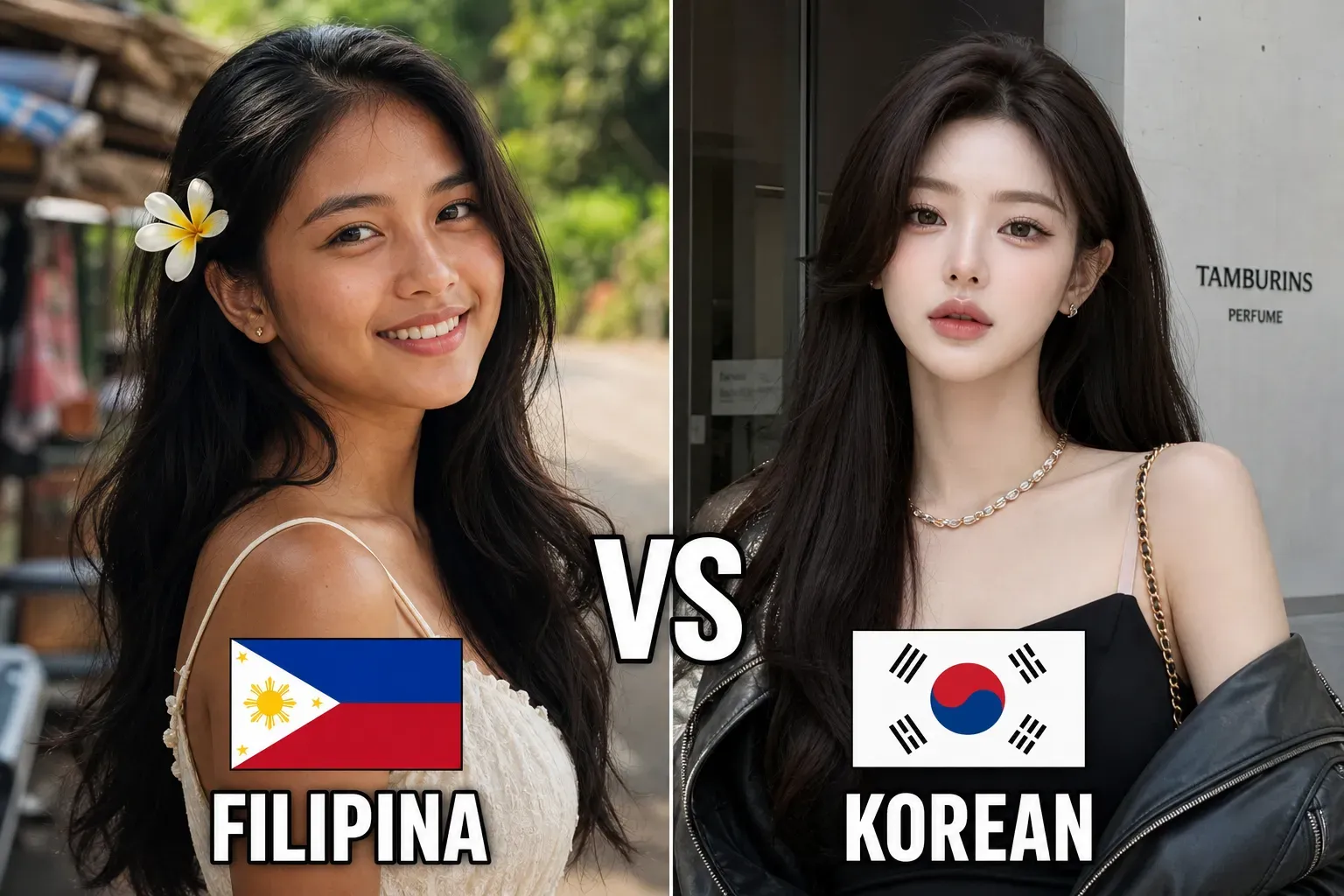
Filipina vs Korean Dating: A Dating Comparison
Filipina vs Korean dating is a comparison of cultural fit, not a ranking of people. Both countries value relationships and long‑term commitment, but communication style and dating pace can feel different for foreigners. Understanding those differences helps you date respectfully and avoid mismatched expectations.
For foreign men, the practical differences often show up in language, dating labels, social expectations, and how quickly a relationship becomes structured. Filipina dating may feel easier for English conversation and long-distance starts. Korean dating may feel more organized, style-conscious, and label-aware.
| Factor | Filipina | Korean |
|---|---|---|
| Primary language with foreigners | English (widely spoken) | Korean preferred |
| Communication style | Friendly, open early | Reserved, careful early |
| Dating pace | Flexible, conversational | Structured, label-focused |
| Family involvement | Central, values-driven | Career and planning emphasis |
| Long-term orientation | Marriage and family-focused | Marriage and stability-focused |
Language and communication style
In the Philippines, English is widely used, which often makes first conversations smoother and helps you clarify intentions early. In Korea, English ability varies more by region and social circle, and many women prefer to communicate primarily in Korean. That can be totally workable, but it usually requires more patience and a willingness to learn basic phrases or use translation thoughtfully.
Communication tone also differs. Filipinas are often comfortable with friendly, open conversation early on, while Korean dating culture can feel more reserved at first and more careful about showing interest. That does not mean lower interest. It reflects a different social norm.
If you are used to direct emotional warmth, Filipina dating may feel more familiar. If you are comfortable reading subtler cues and building trust through repeated effort, Korean dating can also work. In either case, avoid assuming silence means rejection or warmth means commitment.
Dating pace and social norms
Korean dating often involves a more structured progression: clear labels, specific dates, and consistent communication patterns. This can be appealing if you value predictability and clear boundaries. In the Philippines, dating can feel more flexible and conversational, especially in the early stages, which is helpful for compatibility checks before committing.
If you prefer to define the relationship sooner, Korea’s structure may align with your preferences. If you want a longer period to talk and get to know each other, the Philippines may feel more natural.
Public presentation can also differ. Korean dating may place more emphasis on style, planned activities, couple routines, and social image. Filipina dating may place more emphasis on family comfort, public respect, and steady communication. Both require effort; the effort just looks different.
Values, stability, and long‑term expectations
Both cultures tend to value long‑term commitment, but the way stability is evaluated can vary. In Korea, career direction and long‑term planning are often emphasized early. In the Philippines, family values are central, and sincerity and consistency can carry significant weight alongside financial stability.
As a foreigner, being upfront about your plans, lifestyle, and timeline builds trust regardless of the country. Clarity is the simplest way to avoid misunderstandings.
If marriage is your goal, talk about location, language, family involvement, work, and future visits. A relationship can feel romantic online but still fail if the practical path is vague.
Family, distance, and meeting plans
Family matters in both cultures, but timing differs. A Filipina may talk about family early because family life is socially visible and safety matters in international dating. Korean family involvement may become more important once the relationship is clearly serious.
Distance also changes the equation. Dating Filipinas online often begins with video calls and planned visits to the Philippines. Dating in Korea may require more language preparation and a stronger plan for navigating local norms once you arrive.
This makes your first-step strategy different. With Filipinas, focus on a complete profile, reliable messages, video verification, and a realistic visit timeline. With Korean dating, focus on language effort, punctuality, thoughtful date planning, and understanding how labels or expectations are discussed. The better fit is the environment where your normal habits will feel respectful rather than forced.
Who each environment suits best
If you want easy communication, a warm conversational style, and a flexible pace, dating Filipinas may feel more comfortable. If you prefer a more structured dating progression and are prepared for a language gap, Korean dating can be a strong fit. The right choice depends on your communication habits and long‑term expectations, not on stereotypes.
The healthiest mindset is simple: compare environments, then date the individual. Ask what she prefers, respect her pace, and make your intentions concrete through follow-through.
Related reading
Questions, answered
Frequently asked questions
Is English communication easier in the Philippines than Korea?
Generally yes, which can make early conversations and expectations clearer.
Are dating norms more formal in Korea?
Many people in Korea prefer a more structured approach, especially early on, though it varies by individual.
Does dating move faster in Korea or the Philippines?
It depends on the person, but foreigners often find the Philippines more open to early rapport‑building.
Which culture emphasizes family involvement more?
Both are family‑oriented, but the timing and formality of family involvement can differ.