
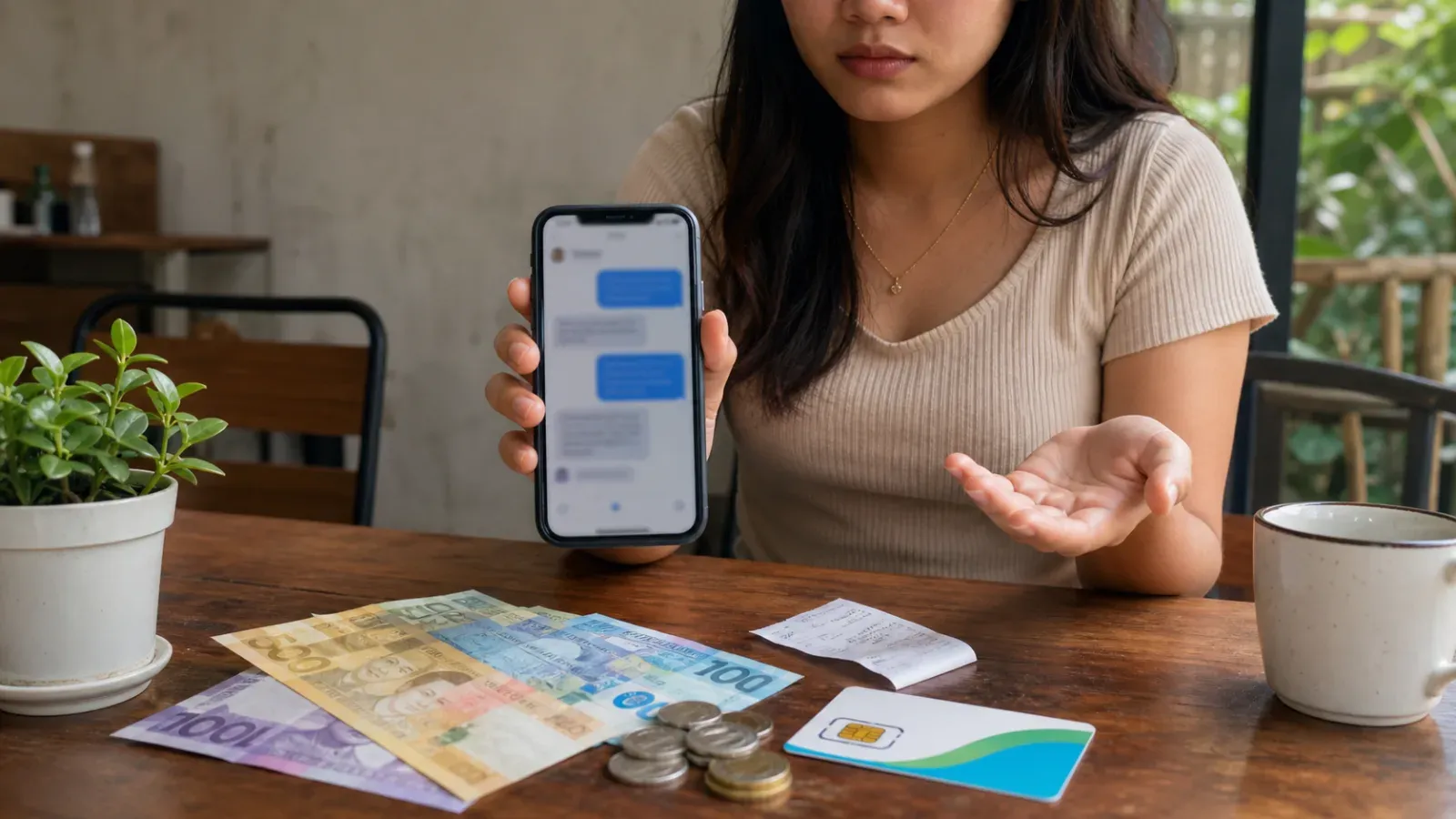
It usually arrives mid-conversation: “My load is almost out, can you send a little so we can keep talking?” Sometimes it is mobile data, a Wi-Fi top-up, or a few pesos to keep her on Messenger. The number is tiny, often a dollar or two, and that smallness is precisely what makes it slip past your guard.
Here is the line worth holding before any money moves: someone you have only ever met through a screen should not need your wallet to stay in touch with you. Prepaid load is genuinely cheap and genuinely runs out in the Philippines, so the request can sound ordinary. The question is never whether load is real, but whether your conversation should depend on you funding her phone.
Why a Filipina Asking for Load Money Deserves Attention
A Filipina asking for load money is not automatically a scam, but load is often the lowest rung of a ladder. A practiced scammer rarely opens with a big number, because a big number gets a no. The first ask is instead something you would feel petty refusing. Once you have paid once, you have answered the only question that mattered to them: will this person pay to keep me around? After that the figures tend to creep upward, from data bundles to a cracked screen, then a sick relative or a fare to visit you.
Notice the rhythm of the request. If it lands right after a wave of affection or talk of a shared future, that timing is not a coincidence. And watch what happens when you decline. A real person shrugs it off and finds signal somewhere. A pressure play turns your no into guilt, sulking, or a fresh emergency that conveniently costs more.
Reading the Request Without Paranoia
A few signals separate ordinary from concerning:
- The chat goes quiet only when you stop topping her up, then revives the moment you do.
- Every video call is gated behind data money she needs first.
- The asks repeat on a schedule, or the amounts edge up each time.
- A simple load request mutates into gift cards, e-wallet transfers, or crypto, which are the formats fraud rarely comes back from.
If none of that is present and she just mentions her load is low in passing, take it at face value and move on. The goal is not to interrogate every offhand comment, only to keep payments from becoming the thing that holds the conversation together.
A Reply You Can Send Calmly
You do not owe a paragraph of explanation. Something like, “I enjoy our chats, but I do not send load or data money. Catch me whenever you are back online,” is plenty. Someone who actually likes you will be back. Caring about a person and bankrolling her connectivity are two different things, and a genuine match will not punish you for keeping them apart.
If It Keeps Coming Back
When refusing once does not settle it, stop debating and start saving. Screenshot the messages, the profile, any account names, numbers, or wallet handles, and proof of what you have already sent. Report the profile to the platform. If money has already left your account, call your bank or payment provider fast, since some transfers can still be pulled back early.
Readers in the U.S. can file with the FTC’s reporting site and the FBI’s Internet Crime Complaint Center (IC3). Keeping your records tidy makes those reports far easier.
Staying Open While Staying Smart
None of this means assuming the worst of every woman who mentions her phone bill. Most people on dating apps are looking for someone, not scheming. The aim is narrower: keep romance and your finances on separate tracks until trust has been built through live video, steady conversation, and time. Let the connection prove itself, and the right one will not need your load to stick around.
A Better Test Than Paying
If you are tempted because the amount is tiny, test the relationship without using money. Suggest a specific time to talk tomorrow when she has signal, or move the conversation back to the dating app where she can reply when she is online. You can also ask for a short live video hello before the next long chat, not as an interrogation, but as a normal step before trusting someone with more of your time.
The response tells you more than the load request did. A sincere match may be annoyed, busy, or embarrassed, but she will not make affection conditional on a top-up. A scam script usually needs the payment now, before the calm version of you comes back.
Official resources
- FTC Romance Scams — how romance scammers build trust and then ask for money
- FBI Romance Scams — FBI guidance on fake online identities and romance fraud
- FBI IC3 — Internet Crime Complaint Center — report internet-enabled fraud if you have been targeted
Related reading
Questions, answered
Frequently asked questions
She says her load ran out and she cannot reply unless I top her up. Is that always fake?
Not always. Prepaid load really does run out in the Philippines, and free Facebook or messenger data caps are real. But a genuine match has other ways to reach you and will reconnect on her own once she gets signal, rather than making the chat conditional on you paying. Treat the pressure, not the prepaid plan, as the warning sign.
It is only fifty or a hundred pesos. Why not just send it to be nice?
Because the amount is the point. A small top-up looks harmless, but it quietly establishes that you will pay to keep her talking. Once that pattern is set, the requests tend to climb to data plans, then phone repairs, then emergencies. Keeping the answer at no while the load is cheap is easier than reversing it later.
I already loaded her phone a couple of times. How worried should I be?
A couple of small loads is not a disaster, but it is a good moment to reset the boundary. Stop sending top-ups, watch whether the warmth survives the no, and keep your chat receipts. If the requests escalate or change to gift cards or wallet transfers, save screenshots and report the profile.